
Starting trackside betting can feel daunting for newcomers. I remember my first visit, overwhelmed by the amount of information. I created this horse racing betting guide to help enthusiasts across the United Kingdom.
My aim is to offer a clear, practical path for anyone starting out. You might study current form or compare the latest odds. Understanding the basics is essential in this beginners guide to horse racing betting.
Learning how do you bet on horse racing effectively takes patience and close attention. I will explain how to assess news and track conditions before deciding. Always wager responsibly and enjoy the sport.
How do you bet on horse racing in the UK?
When I started online horse betting, I learned that preparation improves the experience. Before placing a wager, I study the race and its conditions. This habit keeps me focused and helps me enjoy the sport responsibly.
What I check before choosing a race
I check the race type and field size before making a decision. I check the event time, so I can review every runner properly. Track conditions matter because they can affect a horse’s performance that day.
How I select a licensed bookmaker or betting exchange
Safety comes first when I use online horse betting. I use only platforms fully licensed by the UK Gambling Commission. This protects my funds and means the operator follows strict fairness standards.
I compare traditional bookmakers with betting exchanges to find the best value for my needs.
Horse racing betting terms I learn first
Learning essential horse racing betting terms is vital for beginners. This language helps me use markets with confidence and clarity. These are the core ideas I learned when starting out.
Runners, non-runners and each-way betting
A runner is a horse confirmed to compete in the race. If a horse is withdrawn, it becomes a non-runner, and bets on it are usually refunded. I use each-way betting to cover the win and place, offering security if my horse finishes among the top positions.
Starting price, ante-post and in-play betting
- Starting Price (SP): The official odds at the moment the race begins.
- Ante-post: Placing a bet well in advance of the race day, often with higher potential rewards but more risk.
- In-play betting: Wagering on the outcome while the race is currently in progress.
How horse racing odds show potential returns
Odds are the main way I understand my stake’s potential return. They reflect the bookmaker’s view of a horse’s chance of winning. But odds do not guarantee a winning result. Even the shortest-priced favourite can lose, so I treat odds as a guide, not certainty, while learning new horse racing betting terms.
How I choose a race and read horse racing form
Choosing the right race is my first betting step. I focus on races where I can identify factors that may affect the result. This focused approach stops me betting on every race.
Comparing the race distance, going and course
I begin by checking the track’s conditions. A horse suited to flat, firm ground may struggle on a hilly course with soft turf. I check official going reports to see whether the ground suits its running style.
- Distance: Does the horse have a proven record at this specific trip?
- Going: Is the ground currently soft, good, or firm?
- Course: Does the track layout favour front-runners or those who come from behind?
These factors help me understand the horse racing odds set by bookmakers. If a horse has poor course form but a high price, I consider why the market may be wrong.
How to read horse racing form figures
Learning how to read horse racing form takes practice. I study the numbers beside a horse’s name, showing its recent finishing places. A ‘1’ means a win, while a ‘0’ means it finished outside the top nine.
Recent results, class and finishing margins
I study the race class because a low-level handicap win differs from a Group 1 victory. I also check the finishing margins to see whether the horse won easily or narrowly. These details show whether it is improving or benefiting from a weak field.
Weight, draw, jockey and trainer records
The weight a horse carries can affect its performance in handicap races. I check the draw, especially on tight tracks where an inside start can help greatly. Finally, I review the trainer’s current form and the jockey’s record on that horse.
Using declarations, withdrawals and going updates
Race conditions can change quickly before the start. I check for late withdrawals because a non-runner can change the race tactics. Official going updates matter too, since heavy rain can turn firm ground boggy within minutes.
Horse betting tips I use without treating them as guarantees
I often read horse betting tips from experts for another viewpoint. However, I treat them as opinions, not certain results. They may reveal horses I missed, but I always compare them with my research.
Why I avoid relying on one statistic or tipster
Depending on one information source can be risky. I prefer to weigh several factors before placing a wager. Combining my analysis with wider market trends helps me judge the race objectively.
Types of horse racing bets explained with simple examples
Understanding the different types of horse racing bets helps me make better choices at my favourite bookmaker or exchange.
Having these horse racing bets explained clearly helps me make better decisions before placing a wager.
Win bets and place bets for straightforward selections
A win bet is a basic wager on a horse finishing first. If it wins, I collect winnings based on the starting price or odds taken.
A place bet backs a horse to finish in the top few positions. It suits me when I doubt a win but expect a strong performance.
Each-way bets and how the place terms affect returns
An each-way bet contains two bets: a win bet and a place bet. If my horse wins, both parts pay out.
If the horse only places, I lose the win portion but collect on the place portion. I check the place terms, which show how many positions pay, based on the runners.
“The secret to successful betting is not just picking winners, but understanding the value hidden within the market structure.”
Forecast and tricast bets for predicting finishing order
A forecast requires me to predict the first and second horses in the correct order. A tricast requires the first, second, and third horses.
These bets can offer higher returns because predicting the exact order is difficult. I treat them as fun, low-stake wagers, not core betting strategies for horse racing.
Accumulator, double and treble bets
These multiple bets combine several selections into one wager. A double has two horses, a treble has three, and an accumulator has four or more.
Every selection must win for the bet to succeed. The risk is higher, but a small stake can produce significant returns.
Handicap betting and assessing a horse’s mark
In handicap races, horses carry different weights to balance their chances. I check the horse’s official rating, or ‘mark’, to see its assigned weight.
Assessing this mark is central to my betting strategies for horse racing. A horse dropped in the weights might offer better value than one carrying a heavy burden.
How I compare fixed odds with exchange betting
Traditional bookmakers offer fixed odds, with the price locked when I place my bet. Exchanges let me bet against other people, often offering better value.
Back bets, lay bets and exchange commission
When I ‘back’ a horse, I bet on it to win. When I ‘lay’ a horse, I bet on it to lose.
Exchanges charge a small commission on my net winnings. I include this cost in my calculations to check that I still make a profit.
| Bet Type | Risk Level | Potential Reward |
|---|---|---|
| Win Bet | Moderate | Standard |
| Accumulator | High | Very High |
| Each-Way | Low | Variable |
How I calculate my possible return before placing a wager
I use a simple formula to calculate my potential return: Stake multiplied by the decimal odds. If I bet £10 at odds of 5.0, my total return is £50.
This simple maths keeps my expectations realistic. Understanding these types of horse racing bets ensures I never wager more than I can afford to lose.
Placing a bet, following UK racing news and managing risk
After analysing the form, I move to the betting process and focus on safety. Staying calm helps me make better decisions before I commit my stake.
How I place an online horse betting wager
Selecting the market, stake and odds
When I log into my chosen platform, I open the specific race card. I choose a market, such as a standard win or each-way bet, then enter my stake. It is vital to double-check the odds shown, so they match my expectations before I proceed.
Checking the bet slip before confirming
Before clicking the final button, I review my digital bet slip. I check the horse name, race time and stake amount. This habit prevents costly errors and confirms I accept the potential return.
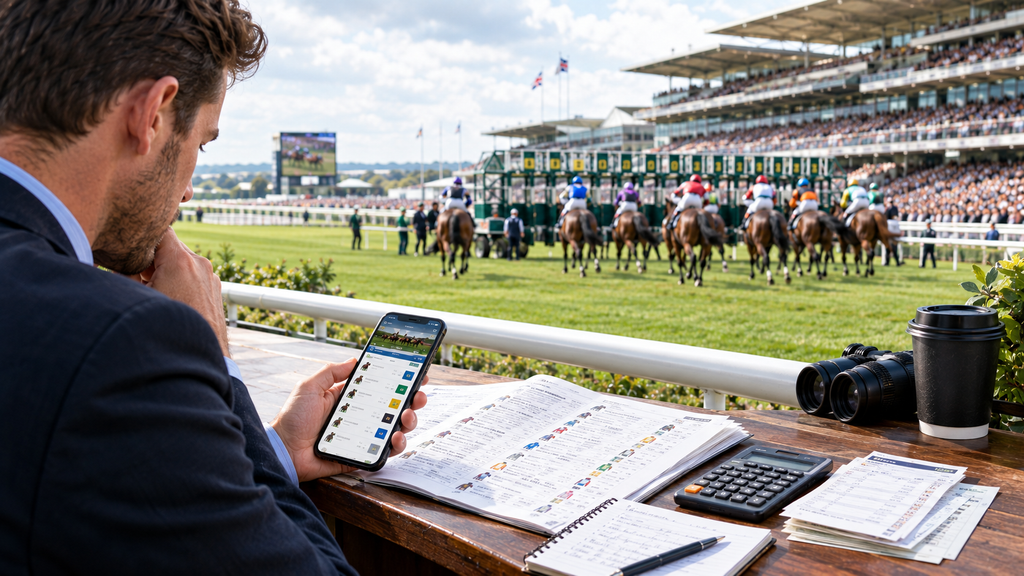
What current UK racing news can change before the off
Going changes, weather and late non-runners
Track conditions can change quickly, so I follow the latest updates. A sudden change in the going, such as good ground turning soft after rain, can significantly alter a horse’s chances. I also watch for late non-runners, which can trigger a Rule 4 deduction from my winnings.
Stable news, jockey changes and stewards’ decisions
I monitor last-minute stable reports and jockey substitutions. A saddle change or late stewards’ inquiry can affect the market. Staying informed helps me adjust my expectations when circumstances change unexpectedly.
Where I verify race information and bookmaker announcements
I rely on official sources, such as the Racing Post or the British Horseracing Authority, for accurate data. Informal horse racing betting tips can be interesting, but I never treat them as guarantees. I cross-reference them with official bookmaker announcements to keep the information current and reliable.
Horse racing betting rules and safer gambling checks for UK punters
Each operator has specific horse racing betting rules that explain how dead heats or abandoned races are handled. I read these terms carefully, so I understand how my bets are settled. I also use safer gambling tools, such as deposit limits and reality checks, to keep my activity healthy.
Bankroll limits and betting strategies for horse racing
Effective horse racing betting strategies rely on strict bankroll management. I never wager more than I can afford to lose, and I set clear limits for every session. Treating betting as entertainment, rather than a way to make money, helps me control my finances.
You May Also Read: Sedecordle
Conclusion
Successful punting needs discipline, not luck. I analyse race conditions and compare odds on platforms such as Bet365 and Betfair. This careful method supports my personal horse racing betting guide.
Learning how do you bet on horse racing takes more than choosing a winner. I check my bet-slip details against current UK racing news before confirming each wager. Knowing about track changes helps me manage my expectations.
I treat every race as a unique challenge with unavoidable uncertainty. Following strict horse racing betting rules protects my bankroll and keeps betting enjoyable. I use safer gambling checks so my hobby remains sustainable over time.
Betting should never be seen as a guaranteed income stream. I encourage you to set clear limits and enjoy the sport’s excitement. Share your betting journey and let me know which strategies suit your style.
FAQ
How do you bet on horse racing if you are a complete beginner?
When I started, I found the best beginners guide to horse racing betting was keeping it simple. I open an account with a licensed UK bookmaker, such as Betfred or William Hill. I choose a meeting, such as Royal Ascot or a Tuesday card at Wolverhampton, and pick a horse.I enter my stake, check the horse racing odds, and click ‘place bet’. I always double-check my selection before confirming.
What are the most important horse racing betting terms I need to understand?
I believe mastering horse racing betting terms is crucial for every punter. Daily basics include ‘Starting Price’ (SP), the odds when the race begins, and ‘Each-Way’, covering a win or top few places.I also watch ‘Ante-post’ markets, which let me bet on major races like the Grand National months early. These markets often offer higher odds before the final runners are confirmed.
How do I read horse racing form to pick a winner?
Learning how to read horse racing form changed my strategy. I study the numbers beside a horse’s name; ‘1-21’ means it finished first, second, then first. I also check the ‘going’, or ground condition, and whether it prefers ‘Good to Firm’ or ‘Heavy’ turf.I check trainer and jockey records, often looking for names such as Charlie Appleby or Ryan Moore. Their involvement can strongly suggest that a horse is ready.
What are the different types of horse racing bets explained for UK punters?
Many types of horse racing bets go beyond a simple win. I use ‘Accumulators’ or ‘Doubles’ to link several horses across races for a higher potential return. For complex predictions, I might try a ‘Forecast’, picking the first and second horses in the correct order.If I feel less certain, I use online horse betting exchanges like Betfair. I place a ‘Lay’ bet, which wagers that a horse will not win.
Where can I find the best horse betting tips?
I find the most reliable horse betting tips through detailed analysis in publications like the Racing Post. I never treat a tip as a guarantee. Instead, I use tips to start my research and compare them with horse racing betting strategies covering weight, draw, and recent stable form.I stay wary of ‘guaranteed winners’. I prefer data-led insights from established experts.
What are the essential horse racing betting rules regarding non-runners?
Understanding horse racing betting rules matters, especially when a horse is withdrawn. If I bet on a horse that becomes a ‘non-runner’ in a standard race, my stake is usually refunded. However, an Ante-post bet may lose its stake unless the market says ‘Non-Runner No Bet’.I also watch for ‘Rule 4’. It deducts winnings when a major contender withdraws shortly before the start, changing the horse racing odds for remaining runners.
How can I manage my budget when following horse racing betting strategies?
My horse racing betting guide puts safer gambling first. I set a strict bankroll limit and never chase losses. One preferred betting strategies for horse racing is a flat staking plan.I wager the same small amount on every race, whatever the odds. I also use tools from platforms like Sky Bet, including deposit limits and cool-off periods.These tools help keep my online horse betting fun and controlled.