
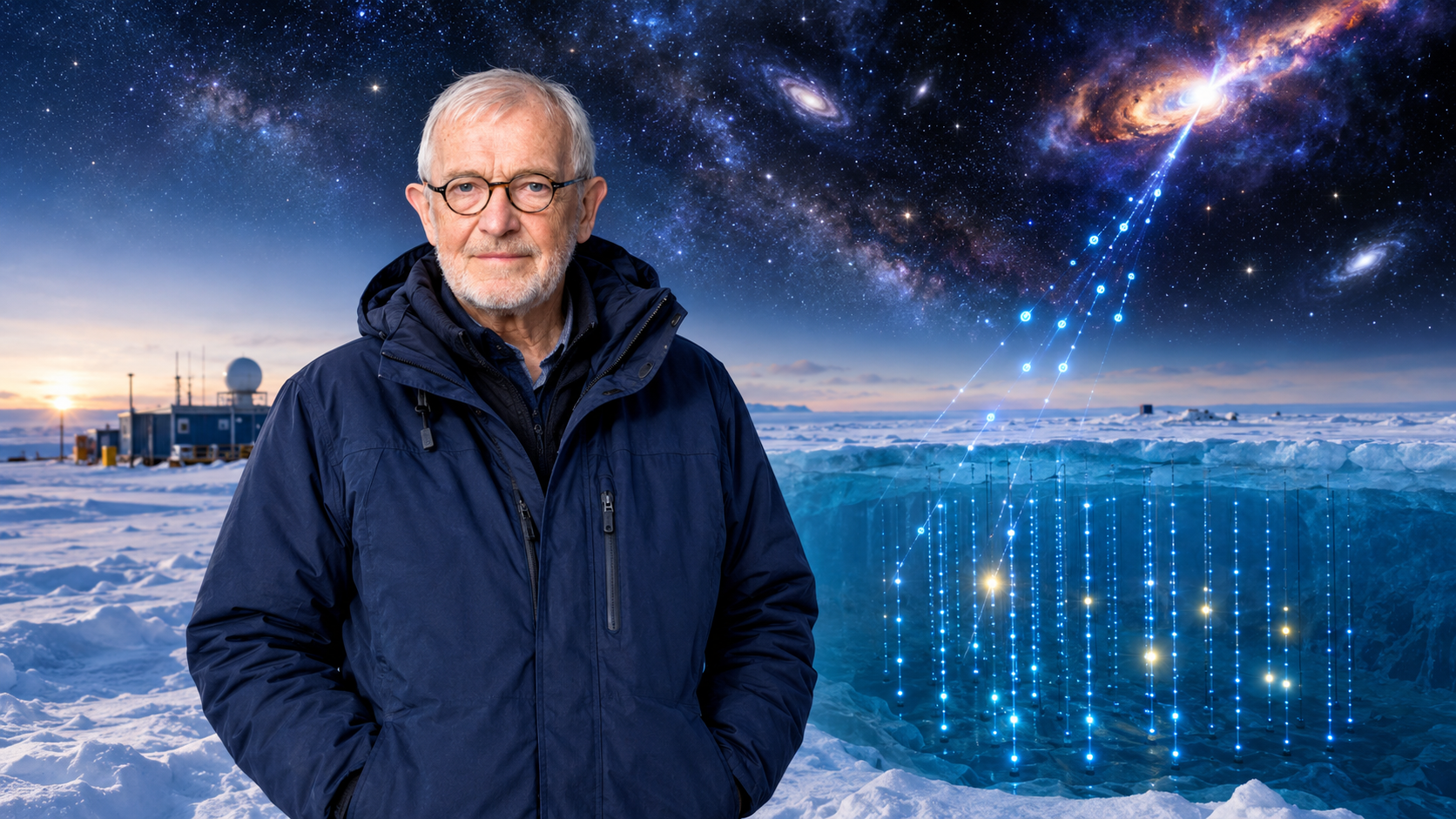
I have always been fascinated by hidden signals crossing space. To understand the universe, we must look beyond light and study invisible particles shaping reality.
The work of francis halzen is transformative. Through particle astrophysics, he has revealed secrets once beyond our reach.
My interest began with breakthroughs at the South Pole. Researchers there now detect astrophysical neutrinos, cosmic messengers from the galaxy’s most violent events.
These tiny, elusive particles offer a unique view of high-energy events. I believe connecting these observations with fundamental physics is essential for anyone studying the modern universe.
What has changed in cosmic-neutrino research
I have watched neutrino physics grow from a theoretical curiosity into a foundation of modern astronomy. For years, these elusive particles were almost impossible to track. Recent technology has changed how we map the high-energy universe.
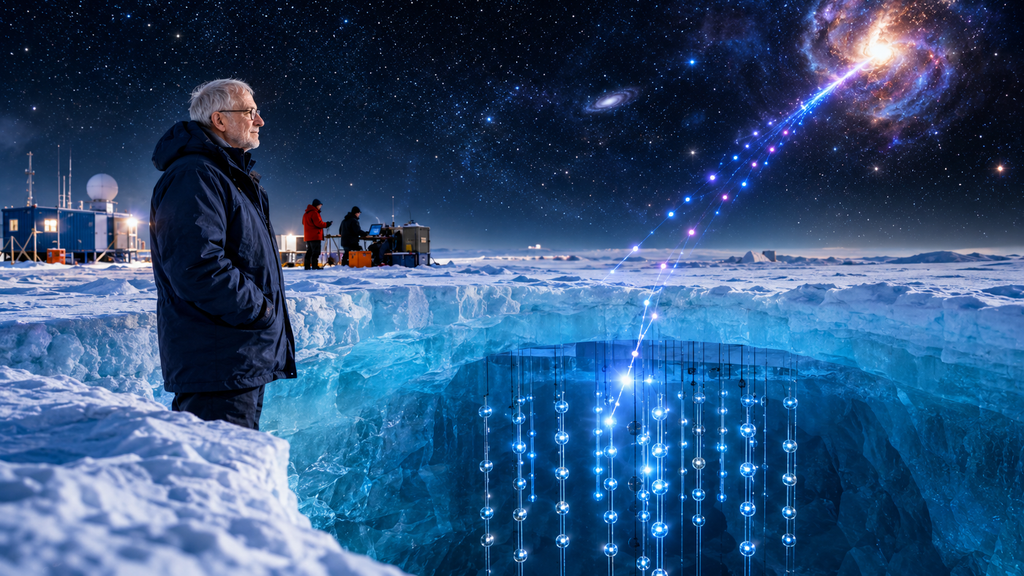
The latest findings that have brought astrophysical neutrinos into focus
Our understanding changed when scientists began detecting high-energy particles from beyond our galaxy. Using a neutrino telescope buried deep in Antarctic ice, researchers can now pinpoint their origins.
- Identification of blazars as potential sources.
- Detection of high-energy events that defy standard models.
- Mapping the arrival directions of particles to specific celestial coordinates.
Why these developments matter in current astrophysics news
These breakthroughs matter because they reveal events hidden from traditional light-based telescopes. Multi-messenger astronomy is now standard, combining light, gravitational waves and neutrinos to show the cosmos in full.
“The detection of high-energy neutrinos marks the beginning of a new era in our exploration of the most violent phenomena in the universe.”
How new observations are reported and independently verified
Strict scientific standards help make every discovery reliable. When a possible signal appears, the IceCube Observatory team alerts the global community. This allows follow-up observations.
Independent checks help confirm that data are not background noise. Scientists compare findings with other observatories. This tests whether the results withstand intense scrutiny.
The scientists and observatories involved in the discoveries
This progress comes from a large international effort involving hundreds of researchers. The IceCube Observatory serves as the heart of this network but relies on global support. That support helps scientists interpret complex data collected at the South Pole.
By working together, these scientists are expanding the boundaries of neutrino physics. Their dedication helps unlock secrets held by the universe’s most powerful events.
francis halzen and the IceCube Observatory
The IceCube Observatory grew from the academic environment of the university of wisconsin. This setting helped turn a bold theory into a working observatory beneath the South Pole.
Francis Halzen’s role at the University of Wisconsin–Madison
As a distinguished professor at the university of wisconsin-madison, Francis Halzen spent decades linking theory with experiments. His leadership changed high-energy physics by supporting a detector built on an unprecedented scale.
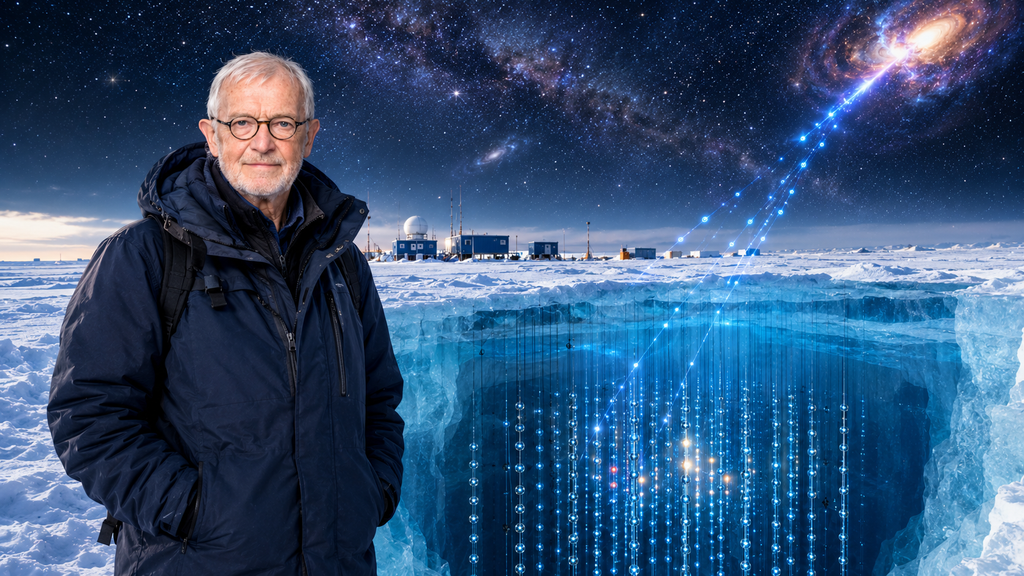
How the IceCube Neutrino Observatory detects high-energy particles
The observatory turns a cubic kilometre of Antarctic ice into a massive particle detector. It captures faint flashes produced when neutrinos interact with atoms in the ice.
Photodetectors embedded deep beneath the South Pole ice
Thousands of digital optical modules are lowered into deep holes drilled through the ice sheet. These photodetectors record tiny signals that reveal elusive particles passing through the ice.
Separating cosmic signals from atmospheric background
Cosmic rays hitting our atmosphere create noise, making detection difficult. The team uses Earth as a filter to isolate high-energy neutrinos from distant, violent space events.
How IceCube changed the search for astrophysical neutrinos
Before IceCube, detecting these particles was a game of chance. Its huge array now helps scientists map the neutrino sky systematically.
| Detection Method | Primary Advantage | Sensitivity Level |
|---|---|---|
| Optical Modules | High volume coverage | Extreme |
| Ice Transparency | Clear signal path | High |
| Earth Shielding | Background reduction | Superior |
The significance of Francis Halzen’s leadership in particle astrophysics
The francis halzen icecube collaboration shows his vision and persistence. He led a global team and became a pioneer in particle astrophysics. His work keeps the francis halzen icecube project at the forefront of modern scientific discovery.
How Francis Halzen’s research explains the universe’s most powerful events
Some of the universe’s deepest secrets hide in its smallest particles. By studying these messengers, I can understand violent events billions of light-years away. Research on francis halzen neutrinos has created a new map of the high-energy cosmos.
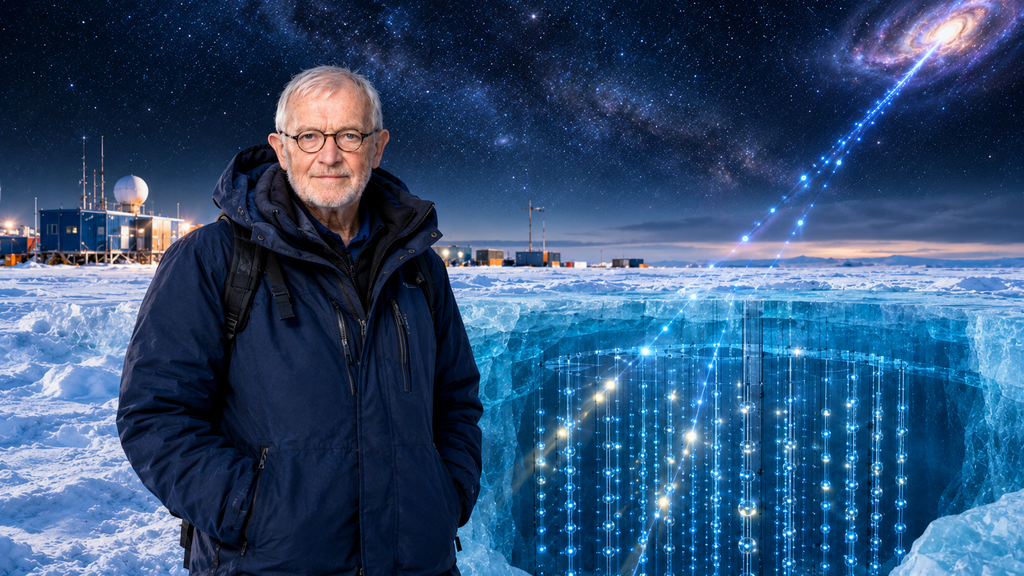
Tracing neutrinos back to cosmic-ray accelerators
Cosmic rays are high-energy protons that travel through space at nearly the speed of light. When they hit gas or radiation near their sources, they produce neutrinos. I see these particles as pristine tracers pointing towards the universe’s most powerful accelerators.
Connections between neutrinos, black holes and active galaxies
Active galaxies, often powered by supermassive black holes, are leading candidates for these cosmic-ray factories. These environments are extremely dense and chaotic. My research in high-energy astrophysics suggests that neutrinos are the only way to see inside these hidden engines.
What neutrinos reveal that light-based telescopes cannot
Traditional telescopes use light, which dust and magnetic fields can block or scatter. Neutrinos, however, pass through matter almost entirely without obstruction. This lets me observe the “inner workings” of galaxies hidden from advanced optical instruments.
Why neutrinos travel across the universe with valuable information intact
Because neutrinos have no electric charge, magnetic fields across space do not deflect them. They travel in straight lines from their sources to our detectors. This property keeps their information perfectly preserved across vast cosmic distances.
The relationship between neutrino physics and high-energy astrophysics
The link between these fields is vital for modern discovery. By combining data from different messengers, I can build a fuller picture of the universe. This interdisciplinary approach is the cornerstone of francis halzen neutrinos research.
What the discoveries suggest about unresolved questions in theoretical physics
Although we have made great progress, many mysteries remain in theoretical physics. We still seek the exact processes that accelerate particles to extreme energies. These findings challenge current models and push us to improve our understanding of nature’s basic laws.
| Messenger | Interaction with Matter | Deflection by Magnetic Fields |
|---|---|---|
| Visible Light | High (Blocked by dust) | None |
| Cosmic Rays | High | Significant |
| Neutrinos | Extremely Low | None |
From South Pole detection to wider scientific consequences
My work with neutrinos shows how South Pole discoveries can shape the wider field of high-energy physics. What began as one mission to capture elusive particles became a global effort to map hidden corners of our universe.
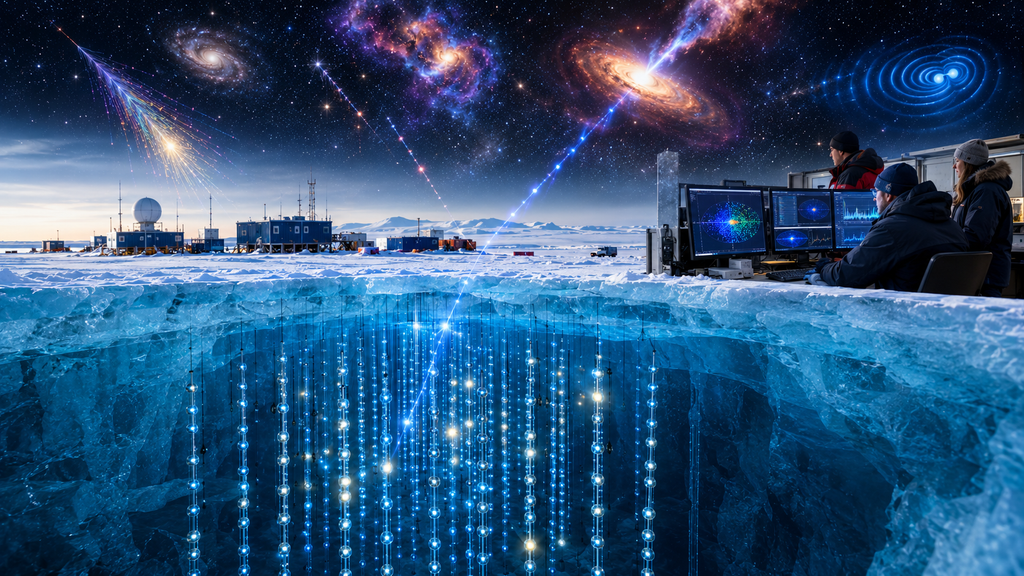
How IceCube data support multi-messenger astronomy
I have seen IceCube data bridge multi-messenger astronomy. Combining neutrinos with light-based observations helps us pinpoint the exact locations of violent cosmic events.
This synergy gives us a fresh view of the universe. It changes how we read data from telescopes and satellites around the world.
What cosmic-ray detection has taught researchers about particle sources
Regular cosmic-ray detection shows that the universe is more active than we once thought. These particles come from extreme places, including active galaxy cores and areas near black holes.
Understanding these sources shows how mechanisms accelerate matter to near-light speeds. This fascinating puzzle still challenges our models of space.
The planned South Pole Neutrino Observatory and the next phase of research
The planned south pole neutrino observatory is the next step in our search for knowledge. Its expansion will collect far more data than before.
How larger detectors could improve the precision of future measurements
I believe larger detectors are vital for more precise measurements. More instrumented ice can reduce statistical uncertainty and improve the clarity of our findings.
This precision helps distinguish different types of cosmic accelerators. It will lead to stronger conclusions about the high-energy universe.
Reactions from the University of Wisconsin and the international research community
My colleagues at the University of Wisconsin and scientists worldwide responded with strong excitement. They see great potential for future breakthroughs in high-energy physics.
We share a goal: to expand what science can achieve. Our teamwork keeps this research at the forefront of modern scientific discovery.
Francis Halzen’s scientific career, influence and recognition
I find the career of this francis halzen scientist compelling. His journey shows deep commitment to uncovering the universe’s hidden secrets through careful study.
From theoretical physics to experimental particle astrophysics
Early in his career, he studied mathematical models describing subatomic interactions. Later, he realised that testing these theories required fieldwork beyond the chalkboard.
This change led him into experimental particle astrophysics. By linking ideas with physical detection, he helped create modern neutrino astronomy.
Key stages in Francis Halzen’s research career
His career included several important changes that expanded scientific possibilities. He moved from studying accelerator collisions to seeking the cosmos’s most energetic particles.
His work at the University of Wisconsin–Madison
At the University of Wisconsin–Madison, he found an ideal place for his ambitious vision. His francis halzen research grew through teamwork and support for different scientific fields.
How Francis Halzen has helped make neutrino science accessible
One of his greatest strengths is explaining complex ideas to the public. He uses clear analogies to show how invisible particles cross huge distances.
By reducing technical language, he has helped more people value particle physics. This outreach has built support for large scientific endeavours.
Francis Halzen’s awards and wider contribution to high-energy physics
His dedication has earned many honours from the international scientific community. These awards recognise his discoveries and his tireless leadership in high-energy physics.
Why his scientific legacy extends beyond the IceCube project
His name is linked closely with the South Pole observatory, but his influence reaches further. He has guided a generation of physicists who keep expanding human knowledge.
His francis halzen research changed how scientists design experiments and study cosmic data. His legacy is a curiosity that will inspire scientists for decades.
You May Also Read: Sedecordle
Conclusion
Studying the universe through neutrinos has changed how we understand the cosmos. The IceCube Neutrino Observatory offers a new way to observe space’s most energetic events. These findings mark a major advance in particle astrophysics.
In the francis halzen biography, I see a career shaped by persistence and vision. His dedication to building a detector deep beneath the South Pole ice remains a landmark achievement. This work helps researchers worldwide study black holes and active galaxies with greater precision.
The many francis halzen awards show how highly his peers regard his scientific contributions. These honours underline his role in shaping modern research methods. Keep following multi-messenger astronomy as scientists uncover more secrets of the night sky. Your interest in these complex topics can support future discoveries across our vast universe.
FAQ
Who is Francis Halzen and what is his role at the University of Wisconsin–Madison?
Francis Halzen is a distinguished scientist. At the University of Wisconsin–Madison, he is principal investigator for the IceCube Observatory. His biography traces his path from theoretical physics to experimental particle astrophysics, where he has organised significant studies of astrophysical neutrinos.
How does the IceCube Neutrino Observatory function as a neutrino telescope?
The IceCube Observatory is a massive neutrino telescope at the South Pole. It contains thousands of photodetectors buried deep within the ice, which detect tiny flashes of blue light from neutrino interactions. This supports cosmic-ray detection and neutrino physics in an environment shielded from surface interference.
Why is Francis Halzen research so vital for high-energy astrophysics?
Francis Halzen research focuses on particles with unique qualities. Astrophysical neutrinos have no charge and almost no mass, so magnetic fields cannot deflect them from straight paths. Their data can point to “cosmic engines”, including black holes and active galaxies, transforming high-energy astrophysics.
What has the IceCube project taught us about high-energy physics?
The IceCube Observatory has helped researchers identify the origins of some of the most energetic particles detected. This work connects high-energy physics with astronomy. By analysing these events, Francis Halzen and colleagues provide essential data to test current theoretical physics under extreme conditions.
What is the future of the South Pole Neutrino Observatory?
The next phase will expand the South Pole Neutrino Observatory, often called IceCube-Gen2. A larger neutrino telescope will capture more events with greater precision. This could revolutionise cosmic-ray detection and cement the University of Wisconsin as a world-leading neutrino science centre.
Can you tell me about some notable Francis Halzen awards?
Francis Halzen is widely recognised for his major contributions to science. He has received major honours, including the Balzan Prize and the Smithson Award. He also received the European Physical Society Prize for Particle Astrophysics and Cosmology, helping turn particle astrophysics from theory into experimental reality.
How does neutrino physics contribute to multi-messenger astronomy?
Multi-messenger astronomy combines data from light-based telescopes, gravitational waves and astrophysical neutrinos. Through the IceCube Observatory, Francis Halzen has helped create a fuller picture of the universe. Pairing neutrino data with traditional observations deepens our understanding of violent, energetic processes in the cosmos.