
When I study international security, few figures stand out like the former german spymaster. Modern intelligence becomes clearer when we examine people who shaped its development. These careers offer a useful view of the challenges faced by global powers.
This article explores the professional journey of august hanning. His intelligence work shows how leaders responded during major geopolitical change. His early and later roles still interest observers studying national security.
Analysing his career helps us understand the balance between state secrecy and public accountability. Join me in examining the key highlights of his tenure and its lasting legacy in espionage. It is a story of strategy, resilience, and the quiet power of behind-the-scenes diplomacy.
August Hanning: The Background Behind a German Intelligence Career
August Hanning’s career was shaped by early influences that guided his professional path. Before reaching national security’s highest levels, he developed a disciplined approach to public service. This foundation supported his later roles.
Early life, education and professional foundations
August Hanning was born in 1946 in Sendenhorst, Germany. He studied law and political science at the universities of Freiburg and Münster. This legal training gave him tools for high-stakes decisions.
His early career showed a strong commitment to the German state. He did not enter intelligence at once. Instead, he gained experience in various administrative and legal roles, learning the intricate mechanics of government bureaucracy.
How August Hanning entered Germany’s security and intelligence sphere
With his legal background, Hanning naturally moved into the security sector. He joined the Federal Ministry of the Interior and specialised in security policy. This move brought him close to the foreign intelligence service.
His skill with complex legal frameworks made him valuable to his superiors. He quickly gained a reputation for being thorough and reliable. These qualities helped him become a prominent intelligence chief in later years.
The domestic and international pressures shaping his early career
Hanning developed his skills amid major geopolitical tension. As a young official, he saw the Cold War’s challenges firsthand. Several factors shaped his professional development during this era:
- The constant threat of espionage within divided Germany.
- The need for robust internal security measures to protect democratic institutions.
- The evolving relationship between German agencies and international allies.
These pressures demanded a leader who could balance secrecy with accountability. By the time he was considered for the role of bnd president, he had refined his expertise over many years. His background prepared him to lead Germany through a changing global landscape.
August Hanning’s Rise to Leadership in the BND
August Hanning’s rise to the BND’s top role shows how demanding security management can be. His promotion also changed how the agency pursued its global mission. The august hanning biography shows the skills he brought to this difficult role.
Appointment as president of the German Federal Intelligence Service
In 1998, Hanning became president of the Bundesnachrichtendienst (BND). Leaders viewed this move as a strategic choice to modernise the service during major geopolitical change. As a seasoned security expert, he guided the organisation through the post-Cold War era.
Responsibilities as Germany’s foreign intelligence chief
As foreign intelligence chief, Hanning gave the German government accurate, timely assessments of international developments. He balanced absolute secrecy with growing demands for parliamentary oversight. This careful approach kept intelligence gathering effective and legally sound.
Managing intelligence priorities across government and overseas operations
Hanning oversaw a vast network of operations across multiple continents. He linked intelligence data to national policy goals and kept strong ties with international allies. His august hanning career showed a focus on operational efficiency and strict analytical standards.
Leadership style and reputation among German security officials
Colleagues described him as a disciplined, methodical leader who valued precision above all else. He gained a reputation as a dedicated security expert who could manage turbulent internal government politics. His calm under pressure strengthened his standing among security officials.
| Focus Area | Strategic Priority | Operational Goal |
|---|---|---|
| Global Espionage | Information Gathering | Risk Mitigation |
| Government Liaison | Policy Support | Transparency |
| International Ties | Intelligence Sharing | Collective Security |
Career Highlights That Defined August Hanning’s Influence
The true measure of August Hanning’s influence came from adapting German security to a fast-changing world. His august hanning profile shows proactive leadership against growing global risks. He modernised security tools instead of simply managing existing systems.
Strengthening Germany’s response to espionage and emerging threats
During his leadership, he modernised intelligence-gathering techniques. He knew traditional methods could not stop sophisticated, state-sponsored espionage. His august hanning achievements include stronger digital monitoring systems that detected foreign interference early.
Counterterrorism work and the changing post-9/11 security landscape
The world changed dramatically after the events of September 2001. He led this transition and recognised that counterterrorism needed closer work between domestic and foreign agencies. Better communication helped Germany resist transnational extremist threats.
Balancing intelligence gathering with democratic oversight
One difficult task was balancing effective surveillance with protecting civil liberties. He stressed that democratic oversight was vital for public trust in intelligence services. His transparent approach helped legitimise the agency’s work during intense public scrutiny.
Co-operation with European and international intelligence partners
He supported international collaboration because no nation could tackle global security alone. His august hanning background in diplomacy helped him build bridges with foreign intelligence counterparts. These partnerships enabled smooth critical data exchange and strengthened collective security across Europe.
August Hanning’s Role in National Security and Crisis Management
As the former president of the German Federal Intelligence Service, August Hanning faced challenges in a rapidly changing world. His august hanning professional approach focused on stability and strategic foresight. I believe his leadership helped manage the challenges of modern statecraft.
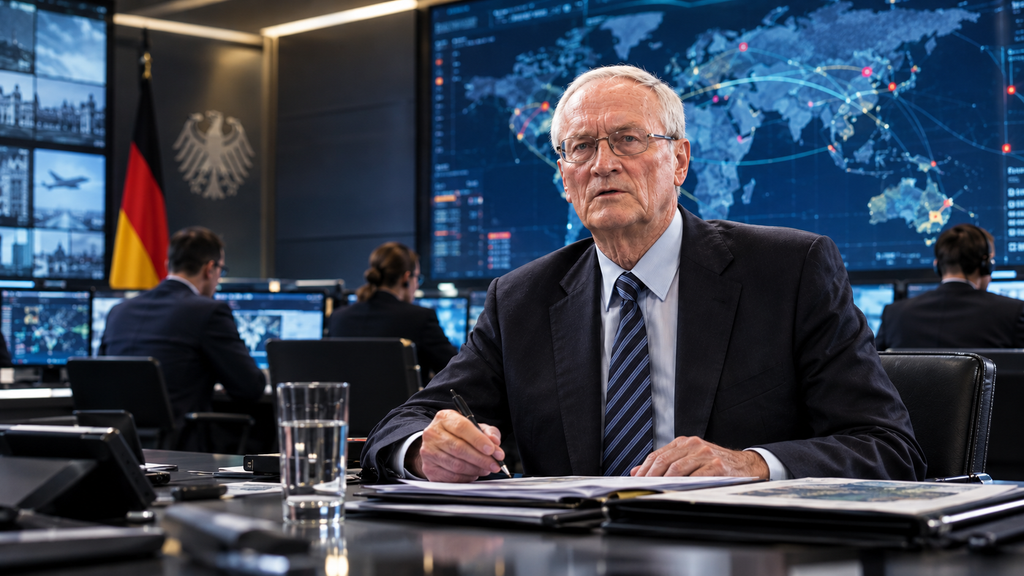
Protecting German interests through foreign intelligence
His agency’s main duty was identifying threats before they reached German soil. He monitored global hotspots, keeping the government informed about risks to national stability. This helped protect citizens abroad and at home.
Security decision-making during periods of international tension
During global instability, intelligence leaders faced great pressure to provide accurate data. Hanning stayed calm under fire, helping policymakers make informed choices. His august hanning accomplishments. include fostering stronger ties with international partners and sharing critical information during volatile periods.
How intelligence briefings influenced policy and risk assessments
Intelligence briefings supported many high-level government decisions. They gave ministers the context needed to assess risks effectively. He turned raw data into policy, linking technical analysis with political strategy.
| Focus Area | Strategic Approach | Outcome |
|---|---|---|
| Foreign Threats | Proactive Monitoring | Risk Mitigation |
| Policy Support | Data-Driven Briefings | Informed Decisions |
| International Ties | Collaborative Intelligence | Global Stability |
Public debate over secrecy, accountability and civil liberties
Working in secret often brought scrutiny over secrecy and democratic values. Hanning often defended classified operations while respecting civil liberties. This debate remains central to the history of German security services.
Transparency is difficult when national security is at stake. Yet he knew public trust was essential for any intelligence agency to work well. His legacy still shapes views of state power and individual rights today.
From Intelligence Chief to Security Expert and Adviser
I find it fascinating how August Hanning used decades of service to become a leading voice in private security. After leaving his high-profile role, he avoided quiet retirement and applied his knowledge to new, meaningful work.
August Hanning’s professional activities after the BND
After leaving the German intelligence agency, Hanning took roles that demanded a clear understanding of global stability. He became a trusted voice for organisations facing complex geopolitical conditions. His skill in reading state-level threats helped people working beyond government.
His work as a security consultant and intelligence expert
As a dedicated security consultant, he has offered guidance on risk management and crisis control. His career shows how former officials connect public policy with private enterprise. As an intelligence expert, he helps clients spot changes in international security before they become clear.
Applying public-sector experience to private and international security challenges
Moving from a German intelligence agency to private work is rarely simple. However, Hanning used careful analysis to help companies protect their assets. Modern security threats cross borders, so they need diplomatic insight and technical skill.
How his advice has remained relevant to national security leaders
Years after formal service, his views remain respected by today’s decision-makers. As a seasoned security consultant, he balances historical context with modern technology threats. National leaders value his advice as an intelligence expert, because he understands the balance between openness and state secrecy.
August Hanning’s Lasting Impact in an Era of Cyber Security
Looking back at August Hanning’s career, I see a bridge between old intelligence and today’s digital world. His tenure changed how Germany faced global threats, from Cold War legacies to modern cyber security demands.
What his career reveals about the evolution of German intelligence
Hanning’s leadership shows how German intelligence changed. He led traditional methods through a period of change while protecting institutional stability. This change involved more than tools; it reshaped the mindset of an entire organisation.
Espionage, cyber security and the future of foreign intelligence services
Since his time leading the BND, the nature of espionage has changed greatly. Human intelligence remains vital, but state actors now contest the digital domain. Modern services must combine advanced data analytics with classic field operations to stay effective.
Why traditional intelligence expertise still matters in digital conflict
Although automated systems have grown, human intuition remains vital for counterterrorism and strategic analysis. Algorithms process vast amounts of data, but cannot match an experienced officer’s careful judgement. This human element helps stop digital conflict from spiralling into uncontrollable chaos.
Assessing his achievements alongside the limits and controversies of his era
Hanning’s career faced criticism, especially over the transparency of intelligence operations. His legacy includes service modernisation and continuing debates about civil liberties. The following table shows how priorities shifted from his era to today’s digital landscape.
| Focus Area | Traditional Era | Modern Digital Era |
|---|---|---|
| Primary Threat | State-sponsored espionage | Cyber security breaches |
| Data Collection | Human intelligence (HUMINT) | Signals and digital intelligence |
| Operational Goal | National stability | Global network resilience |
| Key Challenge | Physical infiltration | Counterterrorism in cyberspace |
His work offers a foundational case study for people studying policy and technology. Examining his decisions helps us understand challenges that still shape the intelligence community today.
You May Also Read: Sedecordle
Conclusion
The career of august hanning offers a clear view of modern statecraft. His move from leading the BND to becoming a trusted national security advisor shows changing demands on state protectors.
Reviewing august hanning achievements reveals a pattern of adaptation. He moved from traditional espionage into the digital age while focusing on long-term stability. His work shows that intelligence means interpreting global shifts, not simply collecting data, to protect national safety.
His strategic thinking still shapes how current leaders respond to international threats. His career remains a valuable case study for anyone studying policy and security. His methods may guide the next generation of experts protecting our shared future.
Which parts of his approach seem most relevant to today’s security challenges? Please share your thoughts on how these historical lessons apply to today’s geopolitical climate. Your perspective supports the ongoing discussion about intelligence in a changing world.
FAQ
Who exactly is August Hanning and why is he significant?
August Hanning is one of modern Europe’s most influential security figures and a prominent German spymaster. He served as president of the German Federal Intelligence Service (the BND) between 1998 and 2005. His leadership proved pivotal as he guided the German intelligence agency through global changes after the 9/11 attacks.
What are some of the most notable August Hanning achievements?
The August Hanning career includes several major August Hanning accomplishments, including modernising Germany’s foreign intelligence service. He strengthened counterterrorism co-operation with international partners like the CIA and MI6. His August Hanning profile also shows his ability to balance sensitive espionage operations with democratic oversight.
What is the August Hanning background in terms of education and early work?
He studied law at the University of Freiburg and the University of Münster, building a strong legal foundation. This August Hanning biography highlight shows how law shaped his BND approach and senior Federal Ministry of the Interior roles.
How does he contribute to the field today as a security consultant?
Since leaving his post as BND president, he became a sought-after security consultant and intelligence expert. He uses his vast August Hanning professional experience to advise private firms and international bodies on risk assessment. He also acts as a high-level national security advisor on a global stage.
What are his views on modern threats like cyber security?
He remains a vocal advocate for combining traditional human intelligence with modern cyber security measures. He argues that technology changes espionage, but human intuition and strategic analysis remain essential. They help the foreign intelligence service defend against digital threats and state-sponsored hacking.
How did his role as a national security advisor influence German policy?
During his time as a top-tier national security advisor and State Secretary, his intelligence briefings helped shape German foreign policy. He provided critical data for decisions during international crises. His work kept national security central while the government managed complex diplomatic tensions.