
Who Was Godiva Lady Godiva?
Godiva Lady Godiva is one of the most recognisable figures in English history and folklore. She is best remembered for the legendary horseback ride through Coventry, which supposedly helped local residents escape the heavy taxes imposed by her husband. However, behind this famous story was a real Anglo-Saxon noblewoman who lived during the eleventh century. Known by the historical name Godgifu, she was the wife of Leofric, Earl of Mercia, and an influential landowner. Her historical importance extended beyond the famous legend because she supported religious institutions, donated valuable possessions and played a significant role in the development of medieval religious communities.
The Early Life and Background of Lady Godiva
Very little reliable information survives about Lady Godiva’s childhood, family background or exact birth date. Historians generally place her life in the late tenth or early eleventh century, although precise dates remain uncertain. Her Old English name, Godgifu, is commonly interpreted as meaning a gift of God. She belonged to the Anglo-Saxon aristocracy and eventually became one of the wealthiest and most influential women of her period. Unlike many women whose lives received little attention in medieval records, Godiva appears in historical documents connected with land ownership, religious donations and charitable activities. These records demonstrate that her importance was not simply created by later storytellers.
Lady Godiva and Her Husband Leofric
Lady Godiva was married to Leofric, the powerful Earl of Mercia, who controlled extensive territories in Anglo-Saxon England. Their marriage placed her within one of the most influential aristocratic families of the period. Leofric was a wealthy political figure, while Godiva possessed considerable resources and influence of her own. Together, they supported several religious foundations and made important contributions to churches and monasteries. One of their best-known achievements was the establishment of a Benedictine religious house in Coventry in 1043. Their relationship is particularly important to the famous legend because Leofric supposedly challenged Godiva to ride naked through the town before agreeing to reduce local taxes.
The Famous Lady Godiva Ride Through Coventry
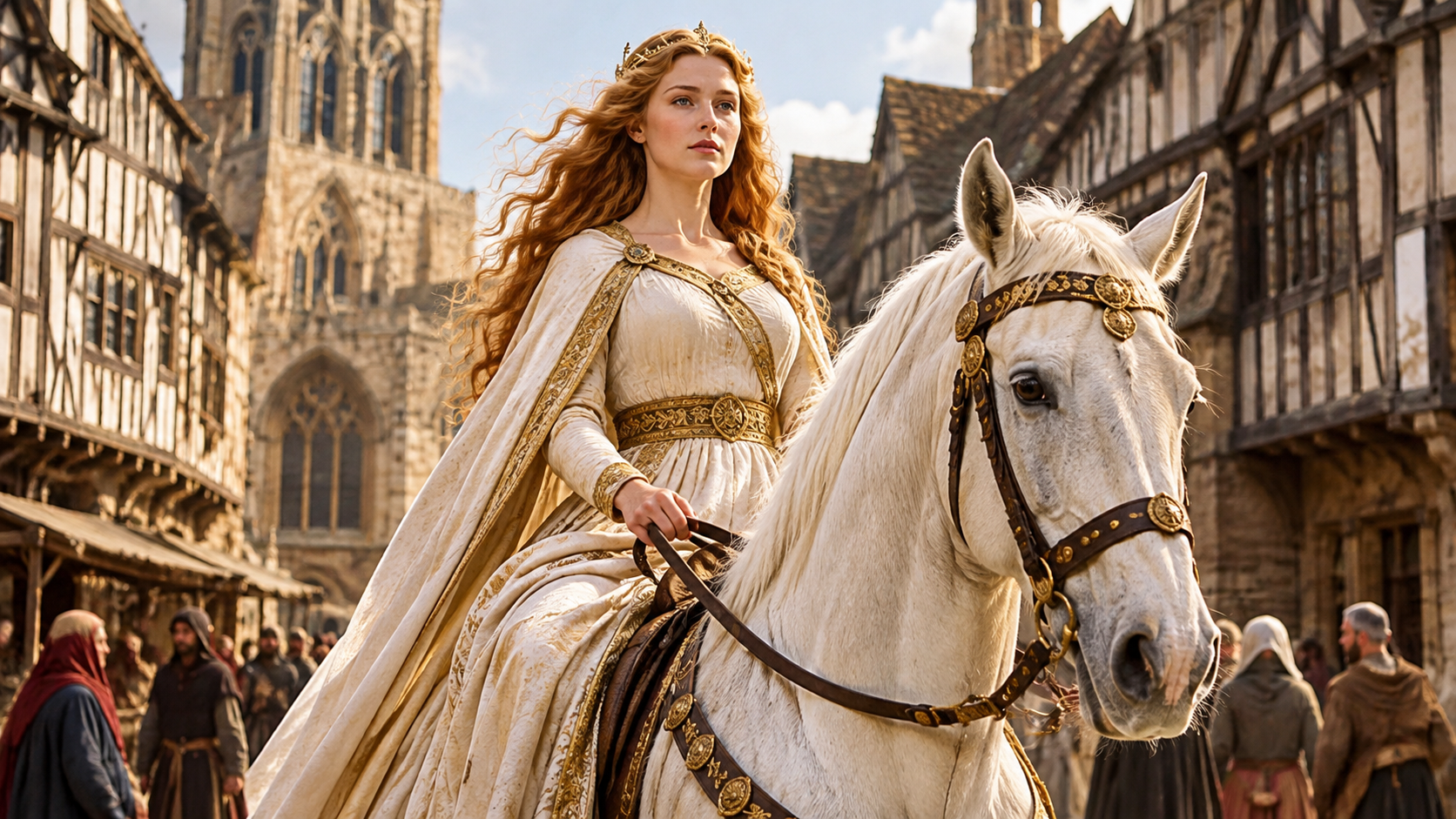
The most celebrated part of the Godiva Lady Godiva story is her legendary ride through Coventry. According to the traditional account, she repeatedly asked Leofric to reduce the heavy taxes imposed on ordinary residents. Frustrated by her continued requests, he supposedly agreed to her demand on the condition that she ride naked through the town. Rather than abandoning her request, Godiva accepted the challenge because she wanted to help the local population. The story describes her riding on horseback through the streets while covering her body with her long hair. She also supposedly instructed residents to remain inside their homes and keep their windows closed during the journey.
Who Was Peeping Tom in the Lady Godiva Story?
Peeping Tom is another famous character associated with the Lady Godiva legend. According to the traditional story, the residents of Coventry respected Godiva’s request and remained indoors while she travelled through the streets. However, one man could not resist the temptation to look outside and see her passing. This character became known as Peeping Tom, and some versions of the tale claim that he was immediately struck blind as punishment for breaking the agreement. Interestingly, Peeping Tom was not included in the earliest surviving versions of the story. His appearance came much later, demonstrating how folklore can develop new characters and details over several generations.
Was Lady Godiva a Real Historical Person?
Yes, Lady Godiva was a real historical figure, although the famous naked horseback ride is not supported by reliable contemporary evidence. Historical records identify her as Godgifu, an influential woman associated with Leofric and the religious foundations they supported. The Coventry story appeared in written accounts more than a century after the period in which she lived. Roger of Wendover, a medieval chronicler, is particularly associated with the early written tradition surrounding the ride. Because there are no contemporary records confirming the event, historians generally approach it as a legend rather than an established historical fact. Separating the documented woman from the later folklore provides a more accurate understanding of her life.
Lady Godiva’s Religious Contributions and Charity
Although the famous ride attracts considerable attention, Godiva’s religious contributions provide important evidence of her historical influence. She was remembered as a generous supporter of churches and monasteries, particularly religious institutions connected with the Virgin Mary. Historical accounts describe her donations of valuable gold and silver objects, which were used to create religious decorations, crosses and images. She and Leofric also supported religious communities in several parts of England. Their foundation in Coventry became particularly important to the town’s development. These activities suggest that Godiva was a wealthy and devout noblewoman whose influence extended into religious, social and economic life.
The Cultural Legacy of Lady Godiva in Coventry
Lady Godiva remains closely connected with Coventry, where her legend has become an important part of the city’s identity. Her story has inspired paintings, sculptures, literature, public celebrations and other artistic works. One of the most recognisable reminders is the statue of Lady Godiva in Broadgate, Coventry, sculpted by Sir William Reid-Dick and unveiled in 1949. The city also celebrates her through historical traditions and cultural references. Her legendary journey continues to attract interest from visitors who want to understand the relationship between the medieval past and modern Coventry. Today, Godiva represents a powerful combination of local heritage, storytelling and historical memory.
Why Is Lady Godiva Still Famous Today?
The continued popularity of Lady Godiva comes from the unusual nature of her story and the themes associated with it. Her legendary ride is often interpreted as an act of courage, compassion and resistance against unfair treatment. Although historians cannot confirm that the event happened, its message has remained meaningful across different generations. Artists and writers have repeatedly presented Godiva as a woman prepared to challenge authority to help others. Her story has also influenced discussions about privacy, public identity, social responsibility and the representation of women in art. More than a thousand years after her lifetime, she remains one of the most recognisable women associated with English folklore.
Frequently Asked Questions About Godiva Lady Godiva
1. Who was Lady Godiva?
Lady Godiva was an eleventh-century Anglo-Saxon noblewoman and the wife of Leofric, Earl of Mercia. Her historical name was Godgifu, and she was recognised for her wealth, religious generosity and support for monasteries. She is particularly famous for the legend that she rode naked through Coventry to persuade her husband to reduce taxes. Although this story made her internationally recognisable, historians distinguish the historical woman from the legendary character. Her documented contributions to religious institutions provide important evidence of her influence in medieval England.
2. Did Lady Godiva really ride naked through Coventry?
There is no reliable contemporary evidence proving that Lady Godiva completed the famous naked horseback ride. The story appeared in medieval chronicles more than a century after her lifetime. Consequently, historians generally regard the event as folklore rather than confirmed history. The legend nevertheless became an important part of Coventry’s cultural identity and remains one of the best-known stories associated with medieval England.
3. Who was Lady Godiva’s husband?
Lady Godiva’s husband was Leofric, Earl of Mercia, a powerful Anglo-Saxon nobleman. Together, they supported religious institutions and helped establish a Benedictine house in Coventry in 1043. He is also the central figure in the legend about her attempt to persuade him to reduce local taxes.
4. What happened to Peeping Tom?
According to the legend, Peeping Tom was the only resident who disobeyed Godiva’s request to remain indoors. He supposedly looked through his window while she rode through Coventry and was struck blind as punishment. However, this character was introduced into later versions of the story rather than the earliest surviving accounts.
You May Also Read: Sedecordle
Conclusion: The Enduring Story of Godiva Lady Godiva
Godiva Lady Godiva remains an important figure in English history because her story combines documented historical achievements with one of Britain’s most famous legends. As an influential Anglo-Saxon noblewoman, she supported religious communities, possessed considerable wealth and contributed to the development of Coventry. Her legendary ride represents courage and compassion, even though historians cannot establish that it actually happened. The addition of Peeping Tom and the many artistic interpretations of her story demonstrate how folklore changes over time. Today, Lady Godiva continues to symbolise Coventry’s heritage and remains a fascinating subject for anyone interested in medieval England, historical women and British folklore.