
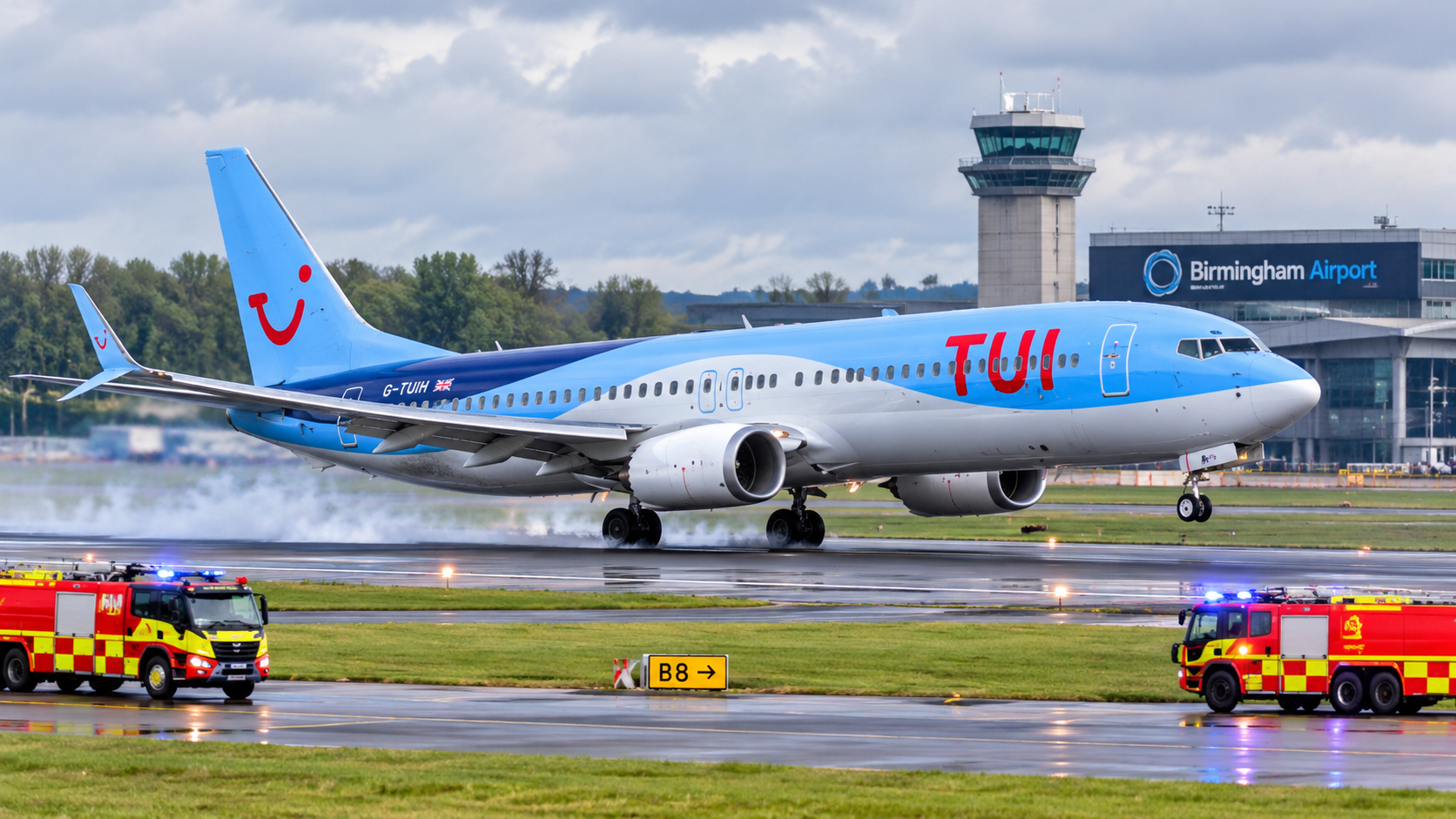
The TUI flight BY6754 emergency landing attracted attention after a holiday flight from Cardiff, Wales, to Paphos, Cyprus, was diverted following an incident shortly after departure. The aircraft, operated by TUI Airways, was unable to continue its planned journey and instead landed safely at Birmingham Airport. The event raised questions among travellers about what had happened, why the diversion was necessary and whether passengers were at risk. Reports confirmed that the aircraft was met by airport emergency services as a precaution, while the airline later provided information about the cause of the incident. The safe landing was the most important outcome for everyone on board.
What Happened to TUI Flight BY6754?
TUI flight BY6754 was travelling from Cardiff Airport to Paphos, Cyprus, when an incident occurred after take-off on 28 September 2025. The flight was operated by a Boeing 737 aircraft and was diverted to Birmingham Airport rather than continuing towards its holiday destination. Reports indicated that the pilots declared an emergency, prompting air traffic controllers and airport teams to prepare for its arrival. The diversion attracted attention because the aircraft was carrying holidaymakers and the situation developed shortly after departure. The plane eventually landed safely at Birmingham, and passengers and crew were able to leave the aircraft without reported injuries.
Why Was the TUI Flight Diverted?
The airline confirmed that the diversion followed a bird strike after take-off. A bird strike happens when a bird comes into contact with an aircraft, potentially affecting its components or creating a reason for pilots to take precautionary action. Although many bird strikes cause little damage, their impact depends on the circumstances and where the contact occurs. TUI stated that the diversion was a precautionary routine procedure and clarified that the incident was not caused by engine failure. The decision to divert allowed the aircraft to land at a suitable airport where ground teams could assess the situation and provide assistance if necessary.
Why Did the Aircraft Land at Birmingham Airport?
Birmingham Airport became the alternative destination for the diverted TUI aircraft. When an aviation emergency occurs, pilots consider several factors before choosing where to land, including aircraft condition, airport facilities, weather, runway suitability and emergency support. Birmingham is a major airport equipped to handle commercial aircraft and has emergency response teams available to assist incoming flights. The airport temporarily suspended operations to accommodate the diverted plane, helping ensure that it could land safely. Emergency crews were ready when the aircraft arrived, following established procedures for an aircraft declaring an emergency.
Were Passengers Safe During the Emergency?
Passenger safety was the main priority throughout the incident. Although emergency declarations can sound alarming to people travelling on board or watching from the ground, they are an important part of aviation safety procedures. Pilots are trained to respond to unexpected situations, communicate with air traffic control and make decisions that reduce potential risks. Passengers on BY6754 were able to disembark safely after the aircraft landed at Birmingham Airport. Reports of the incident confirmed that there were no injuries, making the safe outcome reassuring for passengers, their families and anyone following the news.
How Did Birmingham Airport Respond?
Birmingham Airport temporarily paused normal operations to accommodate the diverted aircraft. This type of response allows airport teams to prioritise an incoming aircraft that may require additional assistance and helps prevent unnecessary complications during its arrival. The airport fire service met the aircraft as part of standard emergency procedures, and the plane landed safely before taxiing to the apron. Temporary operational pauses can affect other flights, but they are an essential part of managing unexpected aviation situations. The response demonstrated how airline crews, air traffic controllers and airport emergency teams work together to support passenger safety during an unusual event.
What Happened to the Passengers’ Holiday Plans?
The diversion disrupted the original travel arrangements for passengers heading to Cyprus. Instead of arriving at Paphos as planned, travellers had to deal with an unexpected landing at another airport and wait for further information about their onward journey. Flight diversions can lead to delays, changes in transport arrangements and uncertainty, particularly for passengers with hotel transfers, airport pickups or scheduled activities. Airlines generally work to provide updated travel information and assistance following disruptions, depending on the circumstances. Passengers affected by this incident would have needed to follow TUI’s instructions and check communications for details of their replacement travel arrangements.
What Does an Emergency Landing Mean in Aviation?
An emergency landing is a situation in which an aircraft lands because continuing its journey may be unsafe or unsuitable. It does not necessarily mean the aircraft is about to crash or that passengers are in immediate danger. Pilots may declare an emergency to receive priority from air traffic control and ensure that emergency services are ready if required. A precautionary diversion can be made when there is a concern that needs to be checked on the ground. Aviation crews are trained to manage different situations calmly, and landing at an alternative airport is often the safest way to deal with an unexpected problem.
What Can Travellers Learn from the BY6754 Incident?
The TUI BY6754 incident highlights the importance of aviation safety procedures and preparedness. Passengers may feel anxious when a flight changes direction or when emergency vehicles are visible at an airport, but these actions are often part of a precautionary response. Travellers should listen carefully to cabin crew instructions, keep their seatbelts fastened when advised and avoid spreading unconfirmed information during an incident. It is also sensible to keep airline contact details, travel insurance information and booking documents accessible when travelling abroad. Understanding how diversions work can help passengers feel better prepared for unexpected changes to their journey.
Frequently Asked Questions (FAQs)
1. What was TUI flight BY6754?
BY6754 was a TUI Airways flight travelling from Cardiff, Wales, to Paphos, Cyprus, on 28 September 2025. It was diverted to Birmingham Airport following a bird strike after take-off.
2. Why did TUI flight BY6754 make an emergency landing?
TUI confirmed that a bird strike occurred shortly after take-off. The airline described the diversion as a precautionary routine procedure and stated that there was no engine failure.
3. Where did TUI flight BY6754 land?
The aircraft diverted to Birmingham Airport in England, where it landed safely and was met by airport emergency services.
4. Were there any injuries on TUI flight BY6754?
Reports about the incident stated that passengers and crew disembarked safely and no injuries were reported.
5. Was TUI flight BY6754 going to Cyprus?
Yes. The flight was scheduled to travel from Cardiff Airport to Paphos, Cyprus, but the diversion prevented it from completing the original journey as planned.
6. Is an emergency landing always dangerous?
No. An emergency landing is often a precautionary safety measure. It allows pilots to respond to a problem by landing at a suitable airport with support available.
You May Also Read: Sedecordle
Conclusion
The TUI flight BY6754 emergency landing was an aviation incident that ended safely after a Cardiff-to-Paphos flight diverted to Birmingham following a bird strike. TUI Airways confirmed that the diversion was precautionary and clarified that there was no engine failure. Although the event caused disruption and uncertainty for passengers, the aircraft landed safely, emergency teams were ready to assist and no injuries were reported. The incident serves as a reminder that diversions and emergency procedures are important parts of commercial aviation safety. Airlines and airport teams are trained to respond quickly, prioritise passengers and manage unexpected situations professionally.