

A comfortable workplace helps teams stay happy and productive. When cold weather arrives, every business owner should understand the minimum working temperature uk standards.
Staying warm protects health and safety, not just comfort. This guide explains the regulations and helps you protect staff during colder months.
Most indoor spaces should ideally be at least 16°C. However, some physically demanding roles may safely operate at 13°C.
I aim to clarify these rules today. Following this guidance helps keep your premises compliant and your workforce safe and highly motivated throughout winter.
What the Latest UK Workplace Temperature Guidance Says
Many people are surprised that UK businesses have no single, universal temperature law. Although many expect a strict legal number, the reality of workplace temperature standards relies on what is considered “reasonable.”

The current position for employers and workers
Employers must protect their staff’s health, safety, and welfare. This includes keeping temperatures comfortable for the work being done. Employees should feel able to report discomfort to their manager immediately.
Proactive communication helps resolve problems before they become health concerns. Employers should listen to reports and take proportionate action to improve conditions. Following workplace temperature standards can protect productivity and morale.
Why there is no single legal temperature limit for every workplace
One temperature cannot suit every industry because needs vary widely. A warehouse worker moving heavy goods needs a different environment from someone sitting quietly at a desk. Several factors influence what is considered suitable:
- The physical exertion required by the specific job role.
- The type of clothing that staff are required to wear.
- The layout of the building and the presence of draughts.
- The duration of exposure to cold or heat.
Because conditions vary, the law focuses on the outcome of comfort instead of a fixed number. 16°C is often cited for sedentary office work, but it is not a statutory limit for every UK workplace.
How recent cold weather has increased attention on workplace safety
Recent winters have brought extreme cold snaps and increased focus on indoor environments. When temperatures plummet, cold stress becomes a foreseeable safety concern that employers cannot ignore. I have noticed more businesses now conducting thorough risk assessments for these changes.
These steps help employers protect their workforce, rather than just meet the bare minimum. By prioritising thermal comfort, businesses reduce illness risks and help teams stay focused during the coldest months.
Minimum Working Temperature UK Rules and Legal Standards
Many business owners find UK working temperature regulations difficult to follow. No single number suits every situation, but clear guidance protects staff from extreme cold.
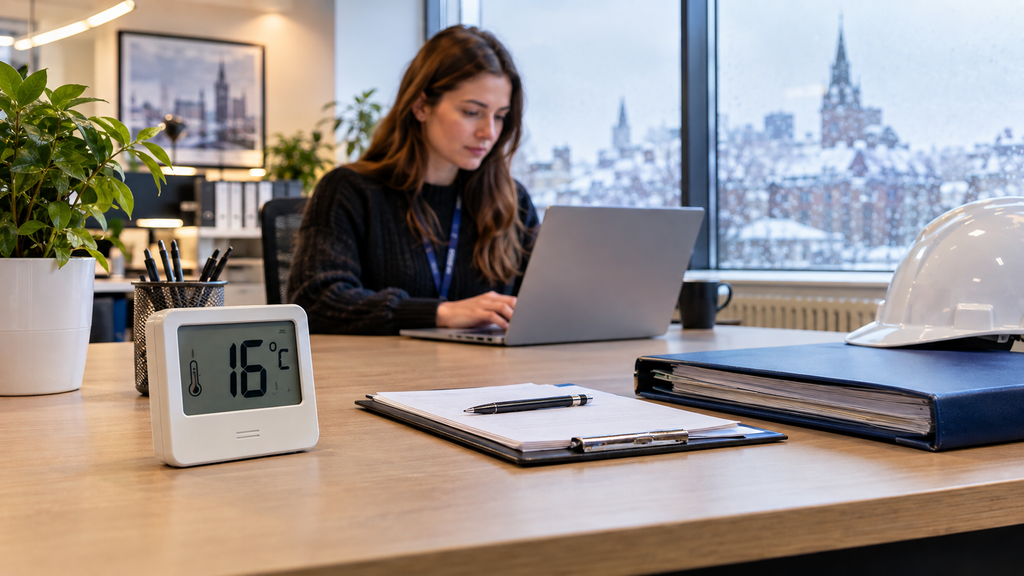
The 16°C minimum for indoor workplaces
For most standard office environments, the Approved Code of Practice suggests a minimum temperature of 16°C. This benchmark suits sedentary work, where employees do not move around often. Maintaining this level helps staff work without the physical distraction of feeling cold.
When the minimum may fall to 13°C
In some industrial settings, the working temperature regulations allow a lower minimum of 13°C. This applies when jobs involve significant physical effort. Manual labour creates body heat, so a cooler workplace can remain safe and comfortable.
How the Workplace (Health, Safety and Welfare) Regulations 1992 apply
The Workplace (Health, Safety and Welfare) Regulations 1992 underpin health and safety law in the UK. They require a reasonable indoor temperature during working hours. Employers must ensure the thermal environment does not harm their team’s health or safety.
The requirement to maintain a reasonable indoor temperature
The law does not define a reasonable temperature with one exact figure. Employers must instead take active steps to monitor their premises. Site managers must keep heating reliable and the indoor climate stable throughout the day.
Why the law also considers comfort, work rate and workplace conditions
The law recognises that different roles need different environments. Work speed, clothing and building layout all affect how people feel temperature. Considering these factors helps employers follow working temperature regulations and support staff comfort.
| Workplace Activity Level | Recommended Minimum Temperature | Typical Environment |
|---|---|---|
| Sedentary (Office/Desk) | 16°C | Administrative offices, call centres |
| Light Physical Effort | 13°C | Retail shops, light assembly lines |
| Heavy Physical Effort | 13°C | Warehousing, construction, heavy manufacturing |
What UK Employers Must Do When Temperatures Drop
Understanding british workplace temperature laws is the first step towards protecting staff during winter. When cold weather arrives, I aim to keep the workplace safe and productive for everyone.
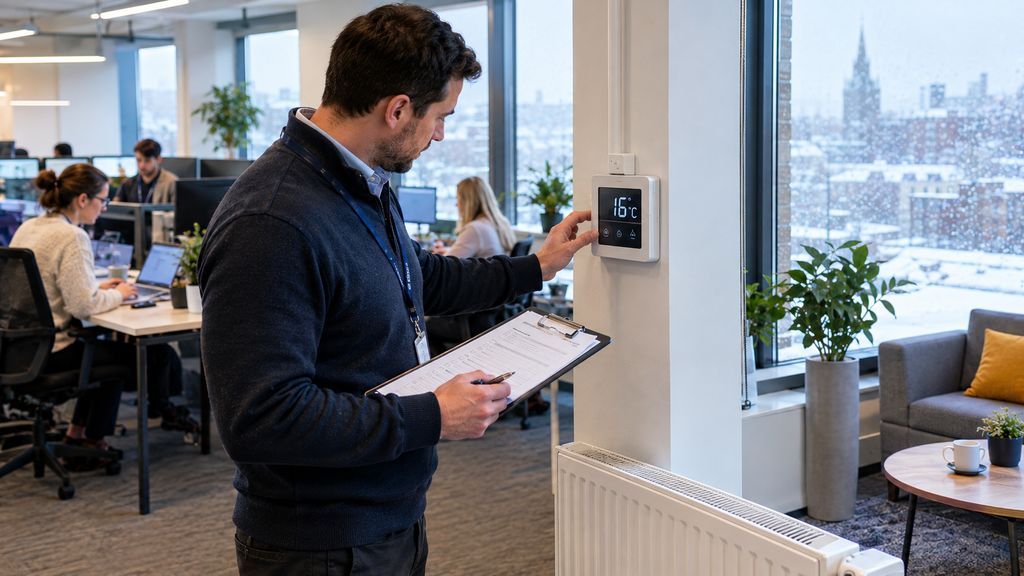
Carrying out a suitable cold-weather risk assessment
A thorough risk assessment supports every safety plan. I check indoor readings, possible draughts, and the physical demands of each task.
I also consider exposure time and whether any team members are especially vulnerable. Identifying these factors early helps me introduce effective measures before the cold causes serious problems.
Consulting employees and responding to reported discomfort
Good communication helps maintain a healthy workplace. I regularly ask my team about their comfort levels.
If someone feels too cold, I investigate the concern seriously. Listening to feedback helps me apply british workplace temperature laws and ensures no one struggles in silence.
Providing heating, ventilation and suitable welfare facilities
Employers must provide effective heating to maintain a reasonable temperature. I keep these systems well maintained without reducing proper ventilation.
I also provide welfare facilities, including warm break areas. These spaces help staff recover and stay comfortable during their shifts.
Checking thermometers and recording temperature readings
Keeping written temperature records is a best practice for compliance. Regular thermometer checks help me spot trends and correct drops before they affect the team.
Reviewing controls when conditions change
Workplace conditions can change quickly. I review my controls whenever the weather or work activities change.
This approach keeps my work aligned with british workplace temperature laws. Staying flexible helps me respond to the unpredictable British climate.
Cold Stress Prevention and Occupational Health Risks
When temperatures drop, staff face risks beyond discomfort. Strong cold stress prevention helps keep your team safe and healthy throughout winter.
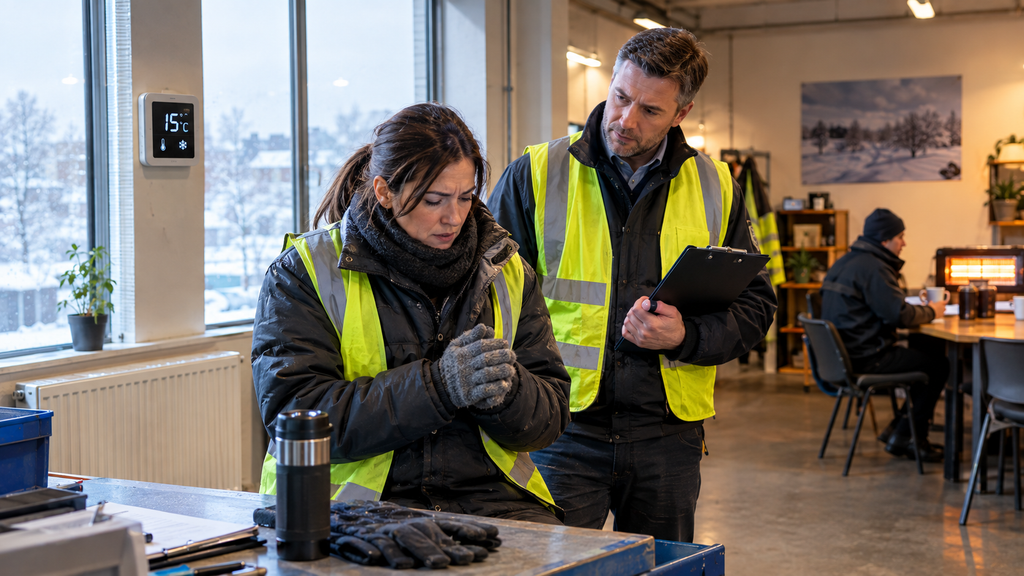
Recognising early signs of cold stress and hypothermia
I advise employers to train staff to spot cold-related illness early. Common signs include persistent shivering, numbness in the extremities, and pale or cold skin.
Treat confusion, slurred speech, or extreme fatigue as a medical emergency. These signs often indicate hypothermia, requiring immediate action under standard occupational health guidelines.
Understanding how cold affects concentration, dexterity and reaction times
Cold can affect safe working before physical illness begins. Cold air can reduce manual dexterity, making tools and machinery harder to use precisely.
The body’s effort to maintain core temperature takes energy from thinking tasks. This can cause slower reaction times and poor concentration, leading to avoidable workplace accidents.
Identifying workers who may need additional protection
Employees respond differently to low temperatures. Employers must identify workers at greater risk of cold-related injury and adjust safety procedures.
Employees with health conditions or limited mobility
People with conditions such as circulation problems or arthritis may struggle to control body temperature. Those with limited mobility may produce less heat through movement, so they need extra support and warmer working conditions.
New, young, pregnant and temporary workers
I recommend watching staff who know less about your specific work environment. New, young, or temporary workers may not spot early cold stress symptoms as quickly as experienced colleagues.
Additionally, pregnant employees may experience changes in their metabolic rate and circulation. Following strict occupational health guidelines for these groups helps create a safe, inclusive environment for everyone.
Temperature Guidelines in the UK for Indoor and Outdoor Work
When we examine temperature guidelines in the UK, no single rule suits every industry. Office comfort needs differ from those on construction sites or in cold storage. Employers must understand these differences to keep teams safe and productive.
Office, retail and warehouse workplace temperature standards
In offices, shops and warehouses, the aim is reasonable thermal comfort. Most temperature guidelines in the UK suggest at least 16°C for sedentary work. For physical work, the minimum may be lower because the body produces heat.
Construction, agriculture and other outdoor working conditions
Outdoor work brings challenges that indoor standards cannot address. On farms and building sites, workers face changing weather. Employers should use dynamic risk assessments, not fixed thermostat settings, because conditions change throughout the day.
Cold environments, refrigerated areas and food-handling workplaces
Specialist workplaces, including walk-in freezers and food-processing plants, need strict procedures. Here, the focus shifts to protective clothing and controlled exposure times. Employers must provide quality thermal gear to prevent cold stress while maintaining hygiene standards.
Why the indoor 16°C rule does not automatically cover outdoor work
The 16°C rule applies to enclosed spaces where heating systems can be controlled. Outdoors, it has little meaning because open air cannot be heated. Safety depends on appropriate clothing and access to a warm place when needed.
How wind, rain, dampness and exposure time affect risk
Environmental factors can make cold feel worse. Wind chill can make air feel colder than the thermometer shows, while damp clothes quickly remove body heat. Employers should monitor these risks closely to protect staff from hypothermia and other cold-related illnesses.
| Work Environment | Primary Focus | Key Control Measure |
|---|---|---|
| Office/Retail | Thermal Comfort | Heating/Ventilation |
| Construction | Weather Exposure | Protective Clothing |
| Cold Storage | Extreme Cold | Rotation/Breaks |
| Agriculture | Variable Conditions | Shelter/Monitoring |
Practical Cold Weather Work Safety Measures
Managing a freezing workplace takes more than turning up the thermostat. A proactive approach supports strong cold weather work safety throughout winter.
Using suitable heating and reducing draughts
First, keep the indoor environment stable. Check that heating systems are serviced and working correctly before a cold snap arrives.
Blocking draughts around doors and windows helps retain heat. Consistent temperature control keeps the workspace comfortable and stops the air becoming stagnant.
Providing warm clothing, gloves, footwear and head protection
In colder conditions, personal protective equipment (PPE) is your main defence. Provide high-quality, insulated clothing that allows easy movement.
Make gloves, thermal footwear and head protection readily available to anyone who needs them. Proper layering traps body heat while allowing moisture to escape.
Planning warm-up breaks, job rotation and shorter exposure periods
For effective cold weather work safety, limit staff time in freezing conditions. Use a rotation system so no one stays exposed to the cold for too long.
“The best safety strategy is one that anticipates the needs of the worker before they feel the chill.”
Keeping rest areas warm, dry and accessible
Rest areas should offer shelter from the cold. These spaces must stay dry, well heated and easy for all employees to reach during breaks.
- Provide hot water facilities for warm drinks.
- Ensure seating is comfortable and away from cold surfaces.
- Check that drying facilities are available for wet outer layers.
Maintaining communication and emergency arrangements
Clear communication matters when conditions are harsh. Set up a reliable system for workers to report discomfort or cold stress symptoms immediately.
Display emergency procedures clearly, and make sure the whole team understands them. Staying connected means help remains available if someone struggles with low temperatures.
How Employers Should Respond to Unsafe Temperatures
Managing a workplace below recommended uk temperature limits requires a clear plan. Act quickly when conditions become uncomfortable or unsafe to protect your team’s health and safety. Proactive communication can stop minor issues becoming serious workplace disputes.
What to do when a workplace falls below the recommended minimum
If readings fall below expected standards, investigate the cause at once. The fix may be simple, such as repairing a broken boiler or sealing draughty windows. Providing temporary heating solutions can provide a vital stop-gap while permanent repairs take place.
- Check thermostat settings and heating system functionality.
- Identify and seal gaps where cold air enters the building.
- Provide additional thermal clothing or personal protective equipment.
When to pause, relocate or reorganise work
When a workplace falls below uk temperature limits, repairs may not finish at once. Consider pausing work or moving staff to a warmer area. Reorganising tasks can allow more movement or shorter shifts in cold zones, reducing risks from low temperatures.
How enforcement, inspections and employee complaints may affect employers
Persistent cold may lead to staff complaints or inspections by regulators. Ignored concerns about uk temperature limits may lead employees to contact the Health and Safety Executive (HSE) or local council. Taking these concerns seriously helps avoid potential enforcement notices and supports a positive working culture.
Working with the Health and Safety Executive and local authorities
Keep an open dialogue with inspectors if they visit your premises. They check that you meet your legal duty to provide a safe environment. Being honest about challenges and improvement plans shows you are a responsible employer.
Keeping evidence of inspections, repairs and corrective action
Documentation is your best defence during a safety audit. Keep a detailed log of temperature readings, maintenance reports and any corrective actions taken. Maintaining accurate records proves you took reasonable steps to address cold hazards and protects your business from unnecessary liability.
You May Also Read: Sedecordle
Conclusion
Maintaining a safe environment takes more than watching a thermometer. Look beyond the standard 16°C indoor benchmark and the 13°C limit for active roles. True safety considers your specific workplace conditions as a whole.
Consider wind, dampness, and the physical demands of each task. Personal needs and clothing affect how staff experience cold conditions. Relying on one number ignores your unique operational setting.
Use regular risk assessments to find hazards before they affect your team. Open communication with employees helps you spot discomfort early and apply effective controls. Documenting your actions shows your commitment to health and safety standards.
Please share your experiences of managing workplace temperatures in the comments below. Your insights help others create safer, more comfortable environments for everyone. Together, we can keep every worker warm, productive, and protected throughout the winter months.
FAQ
What is the official minimum working temperature in the UK for indoor staff?
According to the Workplace (Health, Safety and Welfare) Regulations 1992, no strict “legal” limit exists. However, guidance suggests a minimum working temperature uk benchmark of 16°C for most indoor environments. For significant physical effort, the threshold can fall to 13°C because activity naturally creates body heat.
How do british workplace temperature laws protect me if I work outdoors?
Unlike indoor settings, outdoor sites have no specific degree-based limit. Instead, british workplace temperature laws require employers to complete a thorough risk assessment. This should cover cold weather work safety measures: thermal clothing, windbreaks, and warm-up breaks in a heated rest area.
What are the main occupational health guidelines for preventing cold stress?
Effective cold stress prevention means following occupational health guidelines, not relying only on the thermometer. Reduced dexterity and slower reaction times can lead to accidents. Employers must identify vulnerable workers, including people with heart conditions and expectant mothers, who may need extra protection when temperatures drop.
When should an employer review their workplace temperature standards?
Review workplace temperature standards after major weather changes or repeated reports of discomfort. Under the working temperature regulations, employers should monitor thermometers and record readings, especially during extreme cold snaps. This helps ensure the environment remains “reasonable.”
Are there different temperature guidelines in the uk for warehouses or cold stores?
Yes, specialised environments, such as refrigerated units and large open warehouses, have different needs. Here, the standard temperature guidelines in the uk focus on exposure time, rather than maintaining 16°C. Employers should provide enhanced PPE, warm drinks, and dry changing facilities.
What actions can I take if my office falls below uk temperature limits?
If temperatures stay below the uk temperature limits of 16°C, report this to your manager or health and safety representative. The Health and Safety Executive (HSE) says employers should provide temporary heating, insulate draughty areas, or relocate staff to warmer areas during repairs.
Do employers have to provide specific equipment for cold weather work safety?
Although the law lists no specific items, employers must provide a safe working environment. This often means high-quality gloves, insulated boots, and head protection for people in unheated areas. They should have heating systems serviced regularly by Gas Safe Register-certified professionals, maintaining a steady indoor climate.