
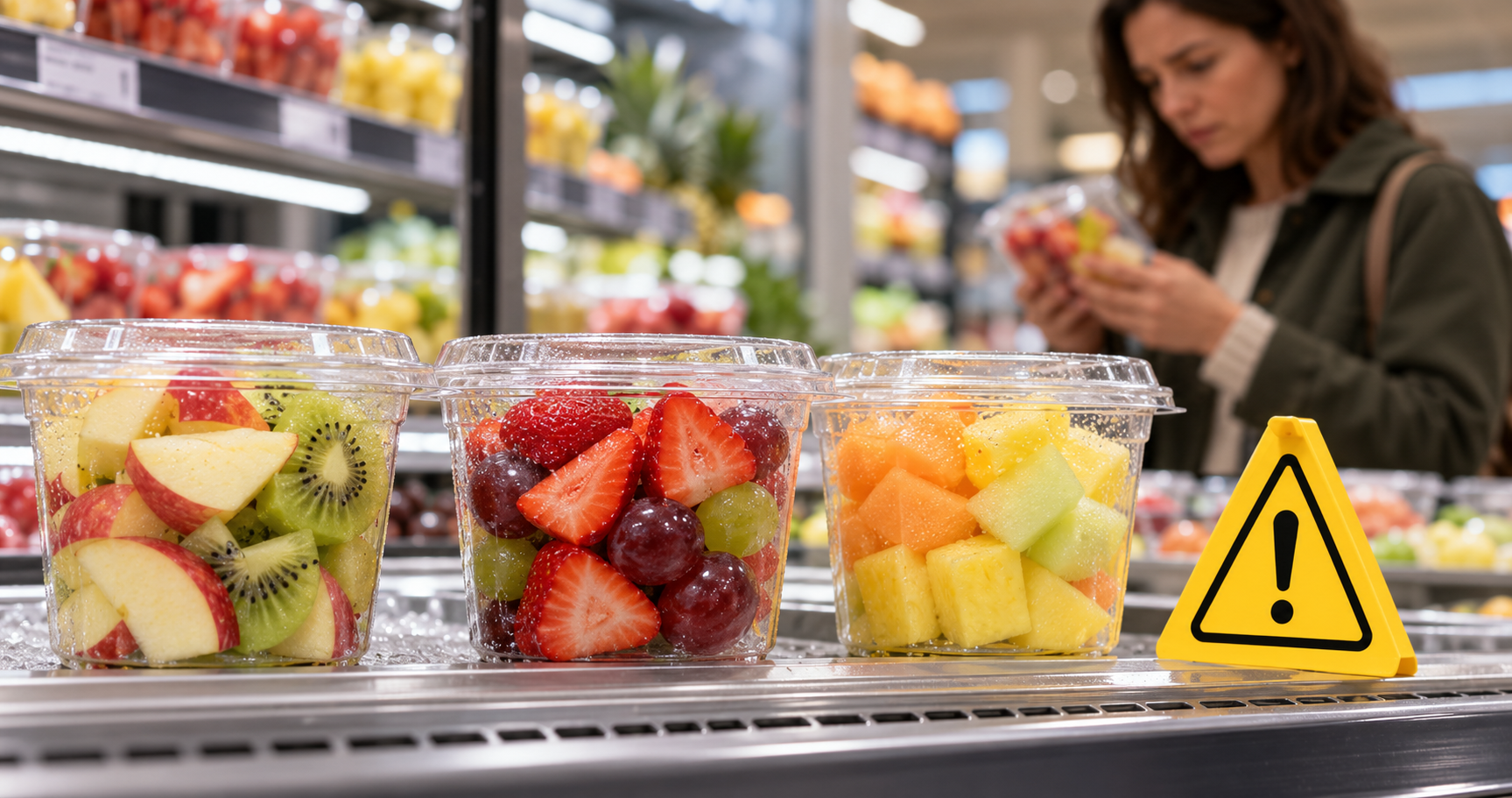
The UK supermarket fruit salmonella recall concerns prepared fruit packs supplied by Prepworld and identified in a Food Standards Agency alert dated 23 June 2026. Testing detected Salmonella in apple and kiwi ingredients used across several supermarket products, prompting advice that customers should avoid eating the affected packs. Understanding the original dates matters because an older warning shared online can easily appear to describe something happening today. This guide explains the June recall, how to identify relevant products and what the official guidance means, without suggesting that every fruit product currently available in British supermarkets carries the same safety risk.
Which Supermarkets and Fruit Products Were Affected?
The June notice covered selected products sold by Asda, Morrisons, Tesco, Sainsbury’s, Marks & Spencer and Waitrose, with affected use-by dates falling on 23 or 24 June 2026. Examples included Asda’s 220g Pink Lady Apple, Mango, Strawberry & Blueberry, Morrisons’ 220g Kiwi, Melon & Strawberries, and Waitrose’s 115g Pink Lady Apple and Grapes. Tesco products included specific Kiwi Fruit Pots, Fruit Kebabs and Melon, Kiwi & Strawberry packs, while selected apple products appeared under M&S. Sainsbury’s listed selected mixed fruit packs, so shoppers should consult the complete official notice rather than assume that these examples cover every affected size and date combination.
How to Check a Fruit Recall Correctly
Start with the published alert date, then compare the exact product name, pack weight and use-by date against the information printed on the packaging. A supermarket name or photograph alone cannot establish whether your purchase matches, especially when similar fruit combinations come in different sizes or appear in separate warnings. For example, Tesco’s 230g Grape & Berry Medley had a separate Salmonella recall involving use-by dates of 16 and 17 February 2026. Keeping those incidents separate helps readers avoid confusing historical reports with current purchases and ensures that any action follows the instructions attached to the correct product and notice.
Why Official Recall Notices Matter
A food recall asks customers to take action after a potentially unsafe product has reached them, whereas a withdrawal removes products from the supply chain. The Food Standards Agency publishes notices explaining the identified risk, the products involved and the steps shoppers should follow, helping households make decisions using specific information. Its notification service also allows consumers to receive food recall updates instead of relying entirely on social media posts or headlines that may omit important details. When checking a warning, read the full notice and any updates carefully, because the product description and instructions determine whether it affects you.
FAQ: What Should I Do With Recalled Fruit?
For the June Prepworld recall, the official instruction was to stop eating the affected products and return them to the shop where they were purchased for a full refund. If you are checking a different warning, use that notice’s instructions rather than assuming the return arrangements will always be identical across retailers and incidents. Keep the packaging available where possible, as its product details can help customer services establish which item you bought and whether it matches the alert. If the packaging is missing or identification remains uncertain, contact the retailer for clarification before deciding whether the recall applies to your purchase.
FAQ: Can Appearance or Smell Show Whether Fruit Is Safe?
Appearance and smell cannot reliably establish whether food contains harmful bacteria, so a fresh-looking fruit pot should never override an official instruction not to eat it. The Food Standards Agency explains that bacteria responsible for food poisoning cannot necessarily be detected through smell or taste, making a quick sensory check an unreliable safety test. Use-by dates also concern safety, and food should not be eaten after that date even when its appearance seems normal and the packaging remains intact. For a recalled product, follow the recall advice directly rather than sampling a small amount to decide whether the warning seems justified.
FAQ: What Symptoms Could Follow Salmonella Infection?
Salmonella infection commonly causes diarrhoea, fever and abdominal cramps, although experiencing these symptoms does not establish that a particular fruit product caused the illness. The June recall notice advised people with symptoms to stay away from work, school or nursery until they had been free of symptoms for at least 48 hours. That precaution helps reduce the possibility of passing infection to other people, including those sharing classrooms, workplaces and childcare settings during everyday activities. If you become unwell after eating a recalled product, retain any available packaging information and explain what you ate when speaking to a healthcare professional.
FAQ: When Should I Seek Medical Advice?
Seek urgent advice from a GP or NHS 111 if illness is accompanied by signs of serious dehydration, including persistent dizziness when standing, unusually marked tiredness, dark urine or passing less urine. Babies and children may show warning signs such as fewer wet nappies, unusual drowsiness or producing few tears when crying, so these changes deserve prompt attention. The NHS recommends starting with small sips when nausea or vomiting makes drinking difficult, and a pharmacist can advise about suitable oral rehydration solutions. Call 999 or attend A&E if dehydration accompanies confusion, difficulty breathing, cold skin or difficulty waking the person.
FAQ: Does This Mean All Supermarket Fruit Is Unsafe?
A recall identifies particular products and dates; it does not automatically establish that every fruit item sold by the named supermarkets presents the same problem. The June warning listed specific prepared packs, so its scope should be understood through those details rather than expanded into a general claim about all fresh produce. Equally, the absence of your usual product from an older article cannot establish whether a separate, newer notice affects something you have bought more recently. Check the official food alert service when a warning appears, and distinguish the publication date from the date somebody reposted the story online.
You May Also Read: Sedecordle
Conclusion
The practical lesson from the UK supermarket fruit salmonella recall is to check precise product information before deciding what a warning means for your household. The Prepworld alert discussed here dates from June 2026, making its original use-by dates essential context whenever the story appears again in search results or social feeds. For any future recall, read the official notice, follow the stated consumer instructions and contact the retailer if the packaging details leave you uncertain about a match. If illness develops, pay attention to hydration and seek appropriate medical advice rather than trying to identify the cause from symptoms alone.