
Introduction
UK military Falkland Islands exercises play an important role in maintaining Britain’s defence presence in the South Atlantic. These activities prepare British service personnel for demanding operational conditions, strengthen coordination between military units and help ensure that forces can respond effectively to potential security challenges. The islands’ remote location, changeable weather and strategic importance make regular training essential for maintaining operational readiness.
The British military presence in the Falkland Islands reflects the territory’s history and its continuing significance for the United Kingdom. Following the 1982 conflict, Britain strengthened its long-term defensive arrangements, including the establishment of a substantial military facility at RAF Mount Pleasant. Today, training activities involve elements of the Royal Navy, British Army and Royal Air Force, with exercises designed around the practical requirements of defending an isolated overseas territory.
Why Are UK Military Falkland Islands Exercises Important?
The main purpose of UK military Falkland Islands exercises is to maintain a credible defensive capability in a geographically isolated territory. British forces must be prepared to operate independently, respond to emerging threats and coordinate different military capabilities across land, sea and air. The Ministry of Defence describes the permanent presence as part of the UK’s commitment to the security of its overseas territories in the South Atlantic. Regular training also helps personnel understand the local environment, practise communication procedures and maintain readiness for different operational scenarios. These activities support deterrence and demonstrate Britain’s continuing commitment to the islands’ defence.
Where Do British Forces Train in the Falkland Islands?
RAF Mount Pleasant Complex is central to the UK’s military presence in the Falkland Islands. Opened in 1985, the facility supports air operations, personnel and transport activities, providing an important base for British forces stationed in the region. The Royal Air Force operates Typhoon FGR4 fighter aircraft and supports transport and tanker capabilities, while army personnel undertake land-based training across suitable areas of the islands. The wider military organisation, known as British Forces South Atlantic Islands, coordinates activities across the region, including operations involving South Georgia and Ascension Island. This infrastructure allows different services to practise working together despite considerable distances from mainland Britain.
What Types of Military Exercises Take Place?
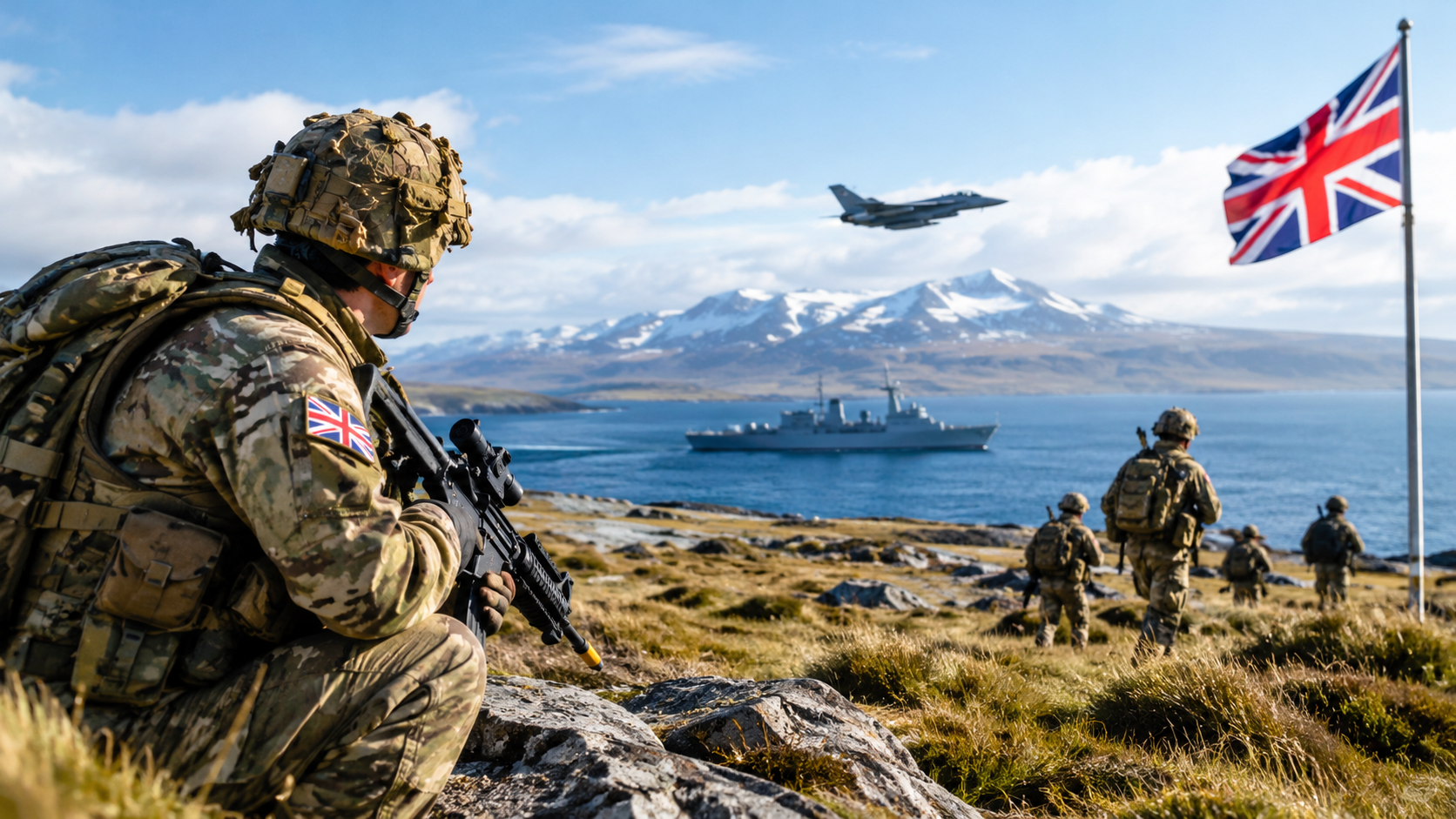
UK military Falkland Islands exercises cover a range of activities, including infantry manoeuvres, air defence training, aircraft interception practice, logistics and joint-service operations. Soldiers may practise moving across challenging terrain, establishing communications, protecting key locations and coordinating with aircraft or maritime units. Aircrew maintain operational skills through regular flying and readiness activities, while transport personnel practise delivering essential equipment to remote locations. Exercises can also test how units respond to simulated threats and changing operational requirements. The precise content varies according to training objectives, resources and operational needs, and not every exercise involves all three armed services simultaneously.
How Do the Army, Royal Navy and RAF Work Together?
Joint training is essential because no single military service can provide every capability required for effective defence. The British Army contributes personnel and ground-based capabilities, the Royal Navy provides maritime presence and transport where appropriate, and the RAF supplies air power, surveillance support and strategic transport. Exercises involving these services help commanders practise sharing information, coordinating movement and allocating resources across different operational environments. Operation Southern Sovereignty, reported by the Royal Navy in December 2025, demonstrated this approach across the South Atlantic, involving HMS Forth, army personnel, RAF Typhoon aircraft and an A400M transport aircraft. Although it covered a wider region, the operation illustrated how forces based in the Falklands support coordinated regional activity.
Why Is the Falklands Environment Challenging for Military Training?
The Falkland Islands present environmental challenges that make realistic training particularly valuable. Strong winds, frequent rainfall, exposed moorland, peat bogs and uneven ground can make movement slower and more physically demanding than it would be on prepared training areas. Personnel must learn to manage equipment, maintain navigation accuracy and protect themselves from changing weather conditions. These factors also influence transport planning, communications and the timing of activities in remote locations. Training in the actual environment helps personnel understand the practical limitations they may encounter during an operation. It also develops resilience, teamwork and decision-making under difficult conditions without relying entirely on simulations or classroom instruction.
How Does Air Power Support the Defence of the Islands?
Air power is an important part of the UK’s defensive arrangements in the South Atlantic. RAF Mount Pleasant hosts No. 1435 Flight’s Typhoon FGR4 aircraft, which support the air defence mission, while transport and tanker aircraft provide additional operational flexibility. Aircrew maintain their skills through flying activities, interception practice and training designed to preserve readiness. Transport aircraft also help move personnel and supplies across remote areas where ground transport may be impractical. In April 2025, an RAF A400M carried out a substantial cargo drop near Goose Green as part of an army exercise, demonstrating the value of joint training for logistics and potential humanitarian assistance.
How Have Military Exercises Evolved Since the 1982 Conflict?
The 1982 Falklands conflict remains an important historical reference point for British defence planning, but modern military training extends beyond recreating past battles. British forces established a continuing garrison after the conflict, combining naval, land and air elements to support the defence of the territory. Contemporary exercises increasingly emphasise coordination, rapid information-sharing, logistics and the ability to operate across multiple domains. Training can also consider modern challenges such as drones, cyber threats and the protection of communications systems. In October 2026, reporting by The Times described Exercise Cape Upholder, which involved British paratroopers and Falkland Islands Defence Force reservists practising an amphibious landing and ground manoeuvres.
What Role Does the Falkland Islands Defence Force Play?
The Falkland Islands Defence Force is a locally recruited volunteer force that contributes to the territory’s defence arrangements. Its members bring local knowledge and familiarity with the islands’ geography, communities and environmental conditions. Training alongside British military personnel can strengthen communication, coordination and understanding between locally based volunteers and regular service members. The force’s role is distinct from that of the permanent British military presence, which includes personnel and capabilities provided by the Army, Royal Navy and RAF. Joint activities can help participants practise their respective responsibilities and improve cooperation during demanding scenarios. The involvement of local personnel also reflects the importance of regional knowledge when planning and conducting military activities in a remote territory.
Are UK Military Falkland Islands Exercises a Response to Argentina?
Military exercises should not automatically be interpreted as a direct response to statements or actions by Argentina. The United Kingdom maintains a military presence in the Falkland Islands as part of its established defence policy, and routine training supports that long-term commitment. Argentina continues to claim sovereignty over the islands, which it calls the Malvinas, while the UK maintains its own position and the islanders have expressed strong support for remaining British. Exercise Cape Upholder, reported in October 2026, was described by The Times as part of planned training rather than a direct response to recent Argentine political statements. Distinguishing routine preparedness from immediate escalation is important when assessing military developments.
How Can the Public Follow Updates on Military Exercises?
People interested in UK military Falkland Islands exercises can follow official updates from the Ministry of Defence, the British Army, the Royal Navy and the Royal Air Force. These organisations publish announcements about selected operations, training achievements, deployments and developments at military facilities. Official sources are particularly useful for checking the names of exercises, participating units and the stated purpose of an activity. Not every exercise receives a public announcement, and operational details may remain confidential for security reasons. Readers should also compare news reports with official statements before drawing conclusions about the scale or significance of a particular activity. This approach helps distinguish confirmed information from speculation and commentary.
Frequently Asked Questions
1. Why does the UK conduct military exercises in the Falkland Islands?
The UK conducts military exercises to maintain defensive readiness, train personnel for local conditions and improve cooperation between military services. These activities also demonstrate Britain’s commitment to protecting the territory and supporting security across the South Atlantic.
2. Where are British forces based in the Falkland Islands?
RAF Mount Pleasant Complex is a principal military facility in the islands. It supports RAF operations, including Typhoon fighter aircraft, transport capabilities and personnel supporting the wider British Forces South Atlantic Islands mission.
3. Which British military services participate in exercises?
Depending on the activity, exercises can involve the British Army, Royal Navy and Royal Air Force. Some activities also include Falkland Islands Defence Force reservists, allowing participants to practise coordination between regular British forces and local volunteers.
4. What is Exercise Cape Upholder?
Exercise Cape Upholder was reported in October 2026 as a training activity involving British paratroopers and Falkland Islands Defence Force reservists. According to The Times, the exercise included amphibious landing practice, overnight movement and ground manoeuvres designed around challenging operational scenarios.
5. Do military exercises mean conflict is imminent?
No. Military exercises are a normal part of defence preparedness and do not, by themselves, establish that conflict is imminent. Their significance depends on the wider circumstances, official statements and independently verified information about the specific activity.
You May Also Read: Sedecordle
Conclusion
UK military Falkland Islands exercises remain an important part of Britain’s defence posture in the South Atlantic. Through land manoeuvres, air operations, logistical training and cooperation between military services, personnel develop the skills needed to operate in a remote and demanding environment. Facilities such as RAF Mount Pleasant and the participation of local reservists support these efforts, while modern training reflects changing operational challenges. Understanding the purpose and context of these exercises helps readers assess military developments more accurately without confusing routine preparedness with evidence of an imminent conflict. For reliable updates, official Ministry of Defence and armed forces publications remain valuable starting points.