
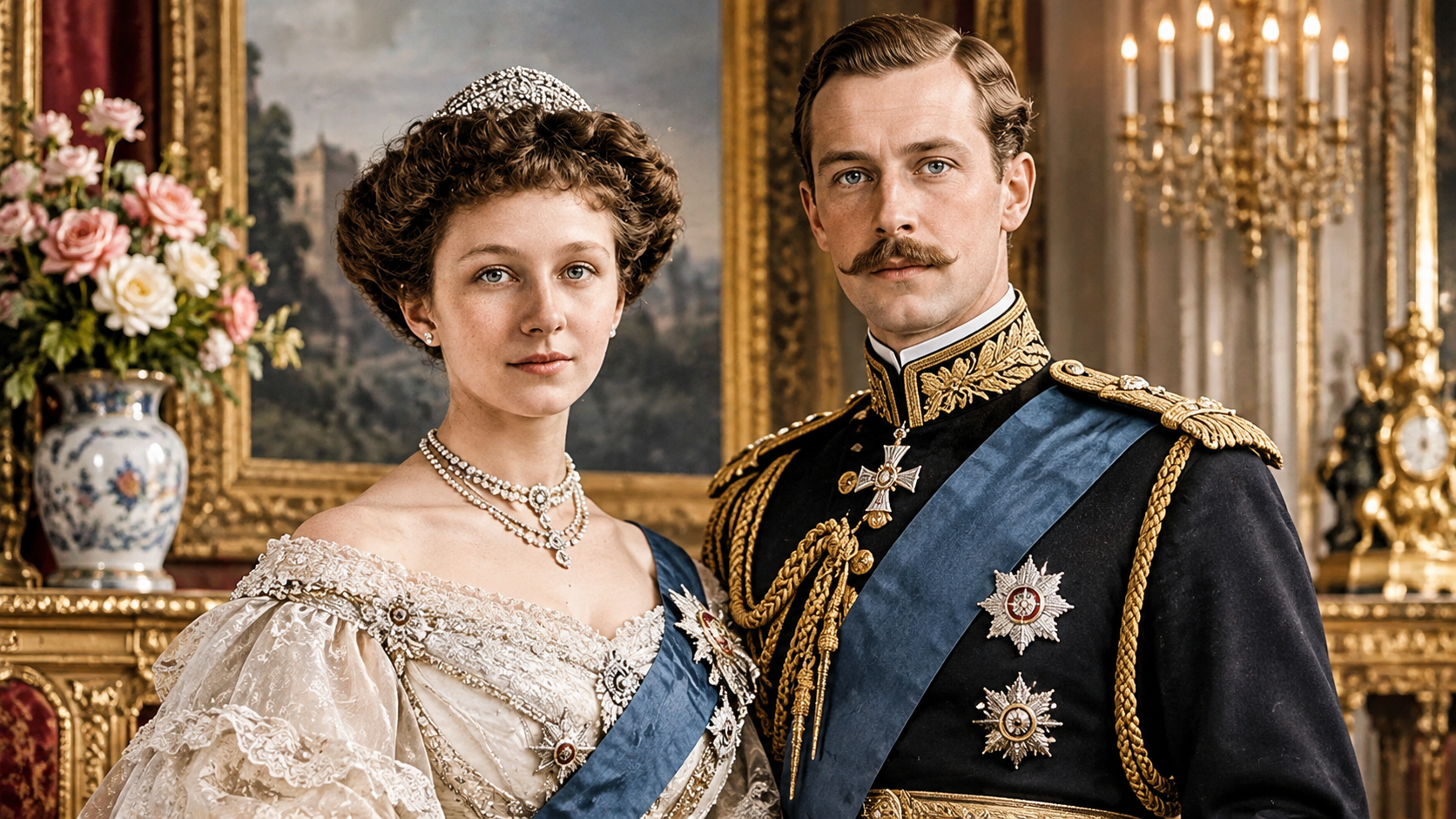
The name Louis Victoria is closely associated with Prince Louis of Battenberg and Princess Victoria of Hesse and by Rhine, a royal couple whose family history connects several important European dynasties. Their marriage in 1884 established a family that would eventually become one of the most recognisable branches of modern British royal history. Although neither became a British monarch, their descendants played significant roles in royal, military and public life. Their story also provides an interesting insight into nineteenth-century European royalty, family relationships and the political changes that transformed royal identities across generations.
Who Were Louis and Victoria?
Prince Louis of Battenberg and Princess Victoria of Hesse and by Rhine were prominent members of European royal society during the nineteenth century. Victoria was born on 5 April 1863 at Windsor Castle, England, and was the eldest daughter of Princess Alice, Queen Victoria’s third daughter, and Louis IV, Grand Duke of Hesse. Prince Louis was born in 1854 and belonged to the Battenberg family, a morganatic branch of the House of Hesse. Their backgrounds brought together British and German royal traditions, creating a family with connections across several European courts and royal households.
Early Life and Family Background
Victoria spent much of her childhood between England and Germany, growing up within an extended royal family that included influential European relatives. Her mother, Princess Alice, died in 1878 when Victoria was only fifteen, leaving her with significant family responsibilities at a young age. She developed a reputation for being intelligent, practical and independent, qualities that distinguished her within aristocratic society. Her upbringing also exposed her to different cultures, languages and traditions, helping her establish strong relationships with relatives across Europe and Britain.
Louis came from a family with an unusual royal background because his parents’ marriage was considered morganatic, meaning his father married someone of a lower social rank. His father was Prince Alexander of Hesse and by Rhine, while his mother was Julia von Hauke, who later received the title Princess of Battenberg. Louis therefore belonged to the Battenberg family rather than holding the same dynastic status as his father’s other relatives. Despite these circumstances, he developed a successful career in Britain and eventually became one of the most senior officers in the Royal Navy.
Louis and Victoria’s Marriage
One of the most important events in their shared history was their marriage on 30 April 1884 in Darmstadt, Germany. Their wedding was attended by Queen Victoria, who had a close relationship with her granddaughter and supported the connection between the families. Louis and Victoria had known each other through their wider family relationships, and their marriage strengthened the links between the British royal household and the German aristocracy. Their partnership continued for several decades, during which they raised four children and experienced significant changes in European royal and political life.
Prince Louis’s Royal Navy Career
Prince Louis built an impressive professional reputation through his long service in the British Royal Navy. He entered naval training as a young teenager in 1868 and gradually progressed through different ranks, demonstrating a strong interest in naval strategy, administration and military organisation. His experience eventually led to senior appointments, including Director of Naval Intelligence in 1902 and First Sea Lord in 1912. These achievements established him as an influential figure in British naval history, although his German family connections later created political difficulties during the First World War.
The First World War and the Mountbatten Name
The First World War created a difficult situation for Louis and Victoria because anti-German sentiment increased significantly throughout Britain. Although Louis had served the British Navy for decades, his German ancestry attracted public and political criticism during the conflict. In 1917, he gave up his German princely titles and adopted the surname Mountbatten, an English version of Battenberg, following the wider changes made by the British royal family. King George V also granted him the title Marquess of Milford Haven, marking a major transformation in the family’s public identity and British aristocratic status.
Louis and Victoria’s Children
Louis and Victoria had four children who established important connections with European royalty and British history. Their eldest daughter, Princess Alice of Battenberg, married Prince Andrew of Greece and Denmark and became the mother of Prince Philip, the Duke of Edinburgh. Their second daughter, Louise, eventually became Queen of Sweden after marrying Crown Prince Gustaf Adolf. Their elder son, George, continued the family line, while their youngest son, Louis Mountbatten, became a prominent naval officer and statesman. These family relationships explain why Louis and Victoria remain significant in discussions about the ancestry of the modern British royal family.
Princess Alice and the Connection to Prince Philip
Princess Alice is particularly important when exploring the historical significance of Louis Victoria because her descendants became closely connected with the British monarchy. Her son, Prince Philip, married Queen Elizabeth II in 1947 and later became the Duke of Edinburgh. Through this relationship, Louis and Victoria became the maternal grandparents of Prince Philip and great-grandparents of several members of the modern British royal family. Their family history therefore extends beyond nineteenth-century European aristocracy and forms part of the ancestry of the royal household familiar to British audiences today.
Victoria’s Life After Louis’s Death
Prince Louis died on 11 September 1921, leaving Victoria to continue her life as a respected member of the British aristocratic community. She maintained relationships with her children and grandchildren, many of whom had responsibilities within royal households and public institutions. Her experiences included periods of considerable personal difficulty, particularly during the First World War and the Russian Revolution, when members of her extended family faced tragic circumstances. Victoria lived until 24 September 1950, dying at Kensington Palace at the age of eighty-seven, having witnessed remarkable changes in European royal history.
Why Is the Louis Victoria Story Important?
The historical importance of Louis and Victoria comes from their influence on the development of the Mountbatten family and its connections with several European royal dynasties. Their marriage brought together the Battenberg and Hesse families, while their descendants later became associated with the British and Swedish monarchies. Louis’s naval career also contributed to Britain’s military history, particularly through his senior leadership responsibilities before and during the First World War. Their story demonstrates how marriage, changing political circumstances and family relationships helped shape the identities of European royal households across generations.
Frequently Asked Questions About Louis Victoria
1. Who were Louis and Victoria?
Louis and Victoria were Prince Louis of Battenberg and Princess Victoria of Hesse and by Rhine, a royal couple who married in 1884. Louis was a senior British naval officer who eventually became First Sea Lord, while Victoria was a granddaughter of Queen Victoria. They belonged to interconnected European royal families and raised four children who established important relationships with other royal households. Their descendants include Prince Philip, Duke of Edinburgh, making them an important part of the family history of the modern British monarchy.
2. How many children did Louis and Victoria have?
Prince Louis and Princess Victoria had four children: Alice, Louise, George and Louis. Their eldest daughter, Alice, became the mother of Prince Philip, while Louise later became Queen of Sweden through her marriage to Crown Prince Gustaf Adolf. George inherited the family’s senior marquessate, and their youngest son, Louis Mountbatten, became a distinguished naval officer and public figure. Each child contributed to the family’s continuing influence, connecting the Mountbatten name with important historical developments in Britain and Europe.
You May Also Read: Sedecordle
Conclusion
The story of Louis and Victoria offers a fascinating perspective on European royal history, family relationships and changing political identities. Their marriage in 1884 created a family whose influence extended across Britain, Germany and Sweden, while Louis’s naval achievements established his own place in British history. Their children and grandchildren continued this legacy through royal marriages, military service and public responsibilities. Although Louis died in 1921 and Victoria in 1950, their contribution remains visible through the Mountbatten family and its connection with Prince Philip and the modern British royal family.