
Introduction
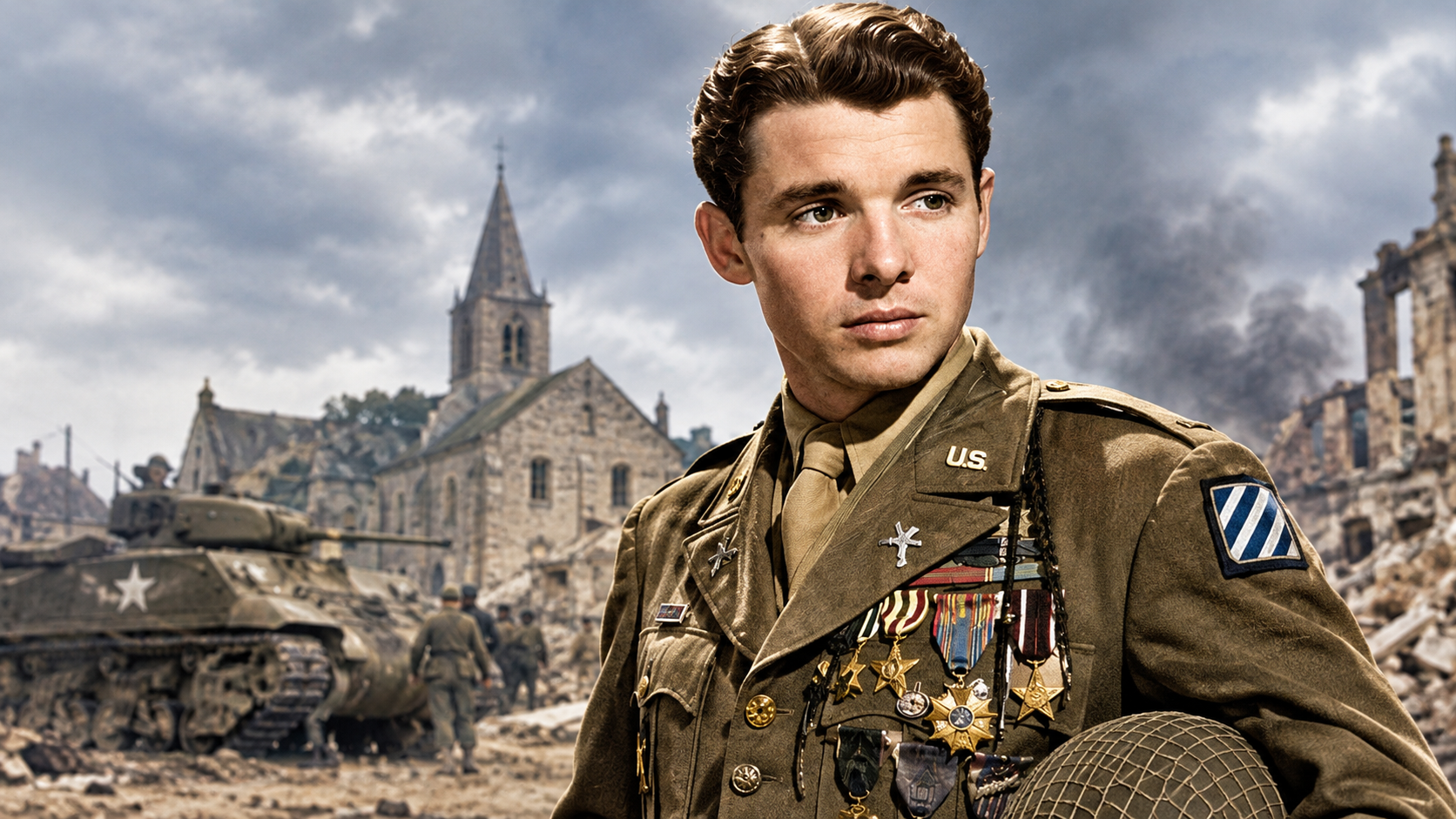
Audie Murphy remains one of the most remarkable figures in American military and entertainment history. Known for his extraordinary bravery during the Second World War, he became one of the most decorated American combat soldiers of the conflict. However, his achievements extended far beyond the battlefield, as he later established a successful career as a Hollywood actor, songwriter and author. His extraordinary journey from a difficult childhood in rural Texas to international recognition continues to inspire people interested in military history, personal determination and courage. Understanding his life provides valuable insight into the experiences of soldiers who served during one of history’s most challenging periods.
Early Life and Childhood of Audie Murphy
Audie Murphy was born on 20 June 1924, near Kingston, Texas, into a poor farming family. He was one of twelve children, and his childhood involved considerable financial difficulties and family responsibilities. His father eventually abandoned the family, leaving his mother to care for the children with limited resources. Murphy left school at an early age and worked on farms, picking cotton and performing other agricultural jobs to help support his family. His difficult upbringing developed his independence, determination and practical skills, although he faced considerable emotional challenges following his mother’s death when he was just sixteen.
Military Enlistment and Second World War Service
Following the United States’ entry into the Second World War, Audie Murphy became determined to join the armed forces. Initially, he attempted to enlist in the Marines and other military branches, but his small physical stature created difficulties during recruitment. Eventually, he successfully joined the United States Army in June 1942, after altering his birth documentation to appear older. Murphy received infantry training before being assigned to the 15th Infantry Regiment of the 3rd Infantry Division. His military journey took him through North Africa, Sicily, Italy, France and Germany, where he demonstrated exceptional battlefield leadership and courage.
Audie Murphy and the Medal of Honor
One of the most significant moments in Audie Murphy’s military career occurred on 26 January 1945, near Holtzwihr, France. During a German counterattack, his company faced advancing tanks and large numbers of enemy infantry. Murphy ordered his soldiers to withdraw to safer defensive positions while he remained behind to direct artillery fire. He subsequently climbed onto a burning tank destroyer and operated its machine gun against advancing German forces, despite being exposed to enemy fire. His extraordinary actions helped prevent his company from being overwhelmed and earned him the Medal of Honor, America’s highest military decoration for bravery.
Military Decorations and Achievements
Audie Murphy received an extraordinary collection of military awards for his service during the Second World War. His decorations included the Medal of Honor, Distinguished Service Cross, Silver Star, Bronze Star and Purple Heart, alongside several French and Belgian honours. He received approximately 33 awards, citations and decorations during his military career, making him widely recognised as the most decorated American combat soldier of the Second World War. His achievements reflected not only personal bravery but also leadership, discipline and commitment to fellow soldiers. His military record remains an important subject for historians studying American involvement in the European theatre.
Hollywood Career and Famous Films
After leaving active military service, Audie Murphy moved towards Hollywood, where he gradually developed a successful acting career. Despite having little professional acting experience, he appeared in numerous films and became particularly associated with Westerns and war-related productions. His most famous film was To Hell and Back (1955), based on his autobiography, in which he portrayed himself. Other notable productions included The Red Badge of Courage (1951), Night Passage (1957) and The Unforgiven (1960). Over approximately two decades, he appeared in more than forty films, establishing himself as a recognised figure in American cinema.
Personal Life, Writing and Music
Beyond his military and acting achievements, Audie Murphy explored several creative interests throughout his life. He wrote an autobiography titled To Hell and Back, published in 1949, which described his wartime experiences and became a bestseller. He also wrote country and western song lyrics, with several compositions attracting attention from established recording artists. Poetry provided another creative outlet, allowing him to express thoughts and experiences beyond his public image. Murphy married actress Wanda Hendrix before later marrying Pamela Archer, with whom he had two sons. These personal and creative interests demonstrate that his identity extended well beyond his reputation as a decorated soldier.
Challenges After the War and Final Years
Although Audie Murphy achieved considerable public success, his life after the war was not without difficulties. He experienced psychological challenges associated with his combat experiences, including symptoms now recognised as post-traumatic stress disorder. Insomnia, depression and recurring nightmares affected his wellbeing, highlighting the lasting consequences of military conflict. Despite these struggles, he continued working in entertainment and remained connected to military organisations, including the Texas National Guard. On 28 May 1971, Murphy died in an aeroplane crash near Roanoke, Virginia, aged 45. He was buried with full military honours at Arlington National Cemetery.
Audie Murphy’s Legacy and Historical Importance
The legacy of Audie Murphy continues to hold considerable importance in military history and popular culture. His wartime actions represent extraordinary personal courage, while his subsequent film career helped introduce his experiences to audiences who might otherwise have known little about his military service. His autobiography and its film adaptation remain valuable cultural records of a soldier’s perspective on the Second World War. His story also encourages wider conversations about the psychological impact of combat and the challenges faced by returning veterans. Today, historians, film enthusiasts and military researchers continue examining his achievements and remembering his contribution to American history.
Frequently Asked Questions About Audie Murphy
1. Who was Audie Murphy?
Audie Murphy was an American Second World War soldier, actor, author and songwriter. He became internationally recognised for his extraordinary bravery during military operations in Europe and received the Medal of Honor for his actions in France in January 1945. Following the war, he developed a successful Hollywood career and appeared in more than forty films. His autobiography, To Hell and Back, also became a bestseller and was adapted into a successful film starring Murphy himself.
2. Why was Audie Murphy famous?
Audie Murphy became famous primarily because of his exceptional military achievements during the Second World War. He received approximately 33 military decorations and is widely regarded as the most decorated American combat soldier of that conflict. His remarkable actions during the Battle of Holtzwihr earned him the Medal of Honor. His later success as a Hollywood actor, particularly through To Hell and Back, further increased his popularity and helped preserve public interest in his extraordinary life.
3. Which film made Audie Murphy particularly famous?
To Hell and Back, released in 1955, was among Audie Murphy’s most successful and recognised films. Based on his bestselling autobiography, the production portrayed his wartime experiences and allowed him to play himself. The film attracted considerable attention and became a major commercial success for Universal Pictures. Other notable films included The Red Badge of Courage, Night Passage and The Unforgiven, demonstrating his versatility as an actor.
4. When did Audie Murphy die?
Audie Murphy died on 28 May 1971, aged 45, in an aeroplane crash near Roanoke, Virginia. The aircraft encountered difficult weather conditions and crashed into a mountainside, killing everyone aboard. His death represented a significant loss for both the military community and the entertainment industry. He was subsequently buried at Arlington National Cemetery with full military honours, where his gravesite remains an important place of remembrance.
5. What is Audie Murphy’s greatest achievement?
His Medal of Honor is generally considered his most significant individual military achievement. He received the decoration for his extraordinary actions on 26 January 1945, when he helped defend his company against a German attack near Holtzwihr, France. His willingness to remain exposed to enemy fire while directing artillery and operating a machine gun demonstrated exceptional courage. Nevertheless, his complete military record, including numerous other decorations, represents a wider legacy of service and leadership.
You May Also Read: Sedecordle
Conclusion
Audie Murphy’s life represents an extraordinary journey of determination, military courage and personal achievement. From his difficult childhood in Texas to his remarkable service during the Second World War, he demonstrated qualities that earned him lasting recognition. His Medal of Honor, successful Hollywood career, bestselling autobiography and creative contributions established an enduring historical legacy. Although his life included significant personal challenges, his experiences continue to offer important lessons about bravery, sacrifice and the long-term effects of warfare. Today, Audie Murphy remains an influential historical figure whose story deserves recognition by future generations.