
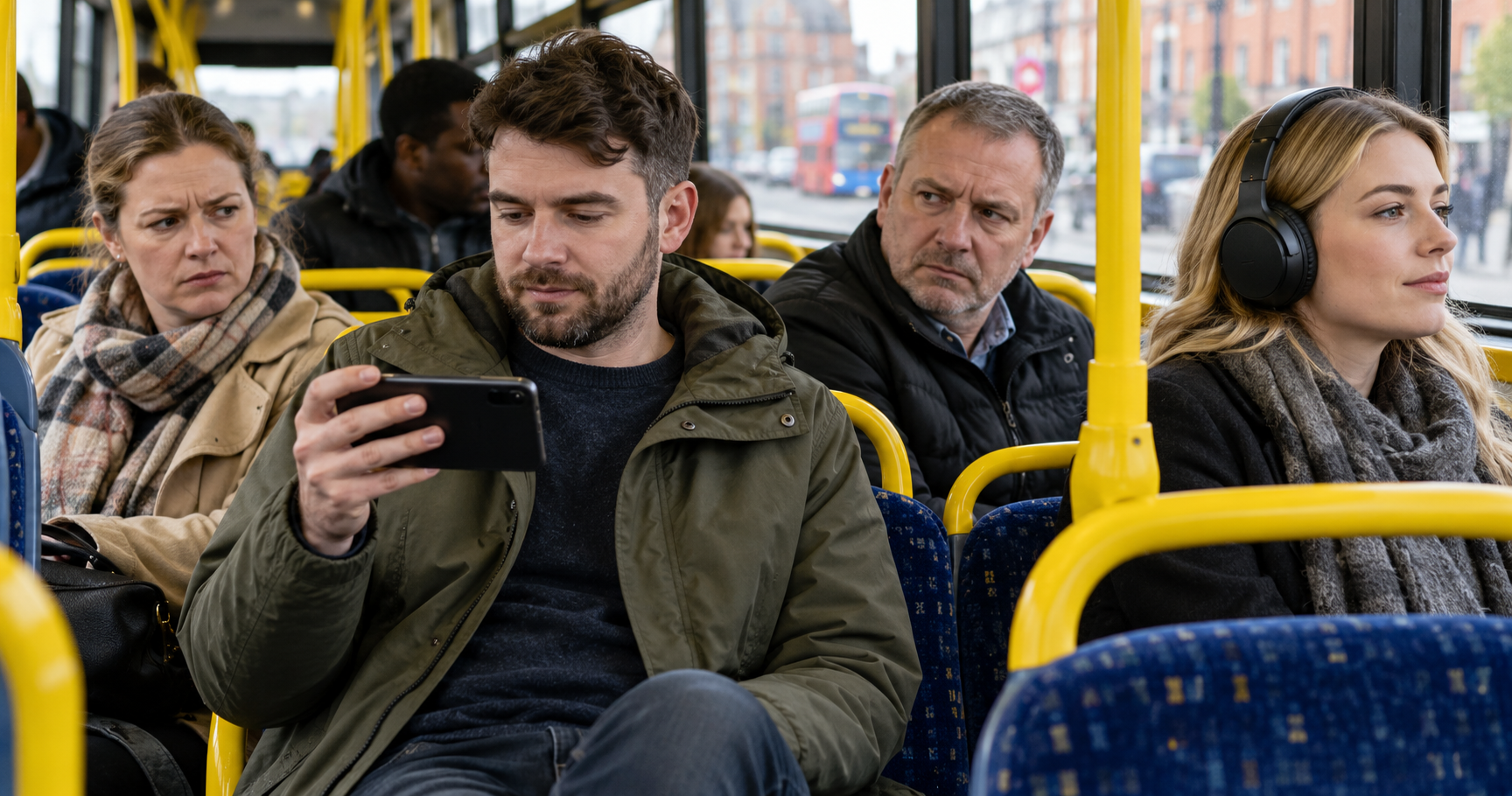
What Is the Andy Burnham Headphone Dodgers Campaign?
The Andy Burnham headphone dodgers campaign addresses a familiar frustration: passengers playing music, videos or phone conversations aloud while others share the same journey. Reports published on 19 October 2026 describe an initiative encouraging quieter travel, alongside guidance supporting local action against nuisance behaviour on buses. For passengers, the distinction is between a public awareness campaign and enforceable rules, because a headline announcing a crackdown does not explain where penalties apply. Understanding that difference helps commuters assess what has been announced, which behaviour attracts attention and why using headphones remains the easiest way to avoid disturbing other people on board.
What Does “Headphone Dodgers” Mean?
“Headphone dodgers” is an informal expression for people who play audio through their device’s loudspeaker in shared spaces instead of listening privately through headphones. On public transport, examples include watching social media clips, streaming programmes, playing music or holding conversations on speakerphone where nearby passengers can hear everything. The expression describes behaviour, rather than a separate category of passenger or an automatic offence triggered simply by carrying a phone without earphones. Someone reading messages, browsing silently or watching a muted video is making a different choice, because their device is not adding unwanted sound to the surrounding bus or carriage.
How Could Bus Fines Work?
Reporting on the announcement says local authorities are being encouraged to introduce rules addressing disruptive behaviour, with fixed penalties of up to £100 available under the relevant arrangements. Those local rules require approval from the Transport Secretary, making it misleading to suggest that every bus journey immediately carries an identical, automatic headphone penalty. Passengers should therefore check information from their transport authority or operator, particularly when travelling between areas with different networks and conditions. The practical message is straightforward: follow displayed instructions, stop disruptive audio when asked and distinguish a possible maximum penalty from a fine imposed in every case.
Who Would Enforce the Measures?
Specialist transport safety officers and police officers are expected to enforce the bus measures, with reporting explicitly stating that drivers would not be responsible for issuing these penalties. That distinction matters because drivers already have responsibilities for operating vehicles safely, managing stops and helping passengers complete their journeys. Effective enforcement also needs staff support, clear reporting channels and consistent responses, rather than relying entirely on a poster asking people to behave considerately. Unite has criticised the proposals as insufficient to address the abuse transport workers experience, highlighting that quieter journeys and stronger protection for staff are related but separate priorities.
FAQ: Could Train Passengers Face £1,000 Fines?
Reports about the campaign distinguish potential rail penalties of up to £1,000 from the smaller fixed penalties discussed for buses, so the figures should not be used interchangeably. Coverage describes existing railway enforcement powers and possible prosecution where passengers refuse to comply, rather than a universal charge automatically applied whenever somebody’s phone makes a sound. Travellers should take staff instructions seriously and read their operator’s published conditions when they need information about enforcement on a particular service. For everyday journeys, using headphones or muting entertainment avoids the underlying disturbance without requiring passengers to interpret penalty headlines while travelling to work.
FAQ: Is Using a Phone on Public Transport Banned?
The reported initiative focuses on inconsiderate noise and wider nuisance behaviour, so describing it as a general ban on using mobile phones would give passengers the wrong impression. People can make their journeys more comfortable by reading, messaging, checking travel information or watching downloaded programmes with the sound muted or directed through headphones. Before playing anything, check that wireless earphones have connected properly, because a disconnected Bluetooth device can send audio through the phone speaker unexpectedly. Keeping media paused while boarding also makes it easier to hear announcements, respond to staff and settle into a seat without distracting nearby travellers.
FAQ: What Should You Do About a Noisy Passenger?
If another passenger is playing disruptive audio, prioritise your comfort and safety rather than feeling responsible for enforcing the operator’s rules or securing a penalty against that person. Where circumstances feel calm, a polite request to lower the sound or use headphones may resolve the problem, but you do not need to confront anyone. Moving seats, changing carriages where possible or informing an available member of staff are reasonable alternatives when the disturbance continues or the situation feels uncomfortable. When reporting an incident, provide practical details such as the service, direction, approximate time and location, while avoiding speculation about anyone’s intentions.
FAQ: Does Everyone Have to Buy Headphones?
Buying headphones is unnecessary if you are happy to keep entertainment muted, read subtitles or postpone listening until you reach somewhere that does not impose sound on other people. Travellers who prefer private listening can choose equipment that suits their needs, while checking the volume remains comfortable and does not leak audibly into nearby seats. Parents can prepare silent activities or download captioned content before boarding, reducing the temptation to hand over a tablet playing through its speakers. The useful principle is consideration for the shared environment, which can be achieved through several choices without purchasing expensive accessories for every journey.
FAQ: Will the Campaign Automatically Mean Quieter Journeys?
A campaign can explain expectations, but its practical effect will depend on how consistently operators communicate those expectations and how effectively authorised staff respond when problems arise. Passengers are more likely to understand the position when signs, announcements and staff guidance describe the same behaviour clearly and explain what happens after someone ignores instructions. The discussion should also recognise that nuisance audio is one part of the travelling experience, alongside reliability, cleanliness, accessibility and the treatment of staff. Judging success therefore requires observing everyday journeys over time, rather than assuming that an announcement or a maximum fine guarantees an immediate improvement.
You May Also Read: Sedecordle
Conclusion
The Andy Burnham headphone dodgers debate centres on a simple expectation: personal entertainment should not become compulsory listening for everyone sharing a bus or train during their journey. For readers following the announcement, the distinctions are between awareness messages, locally approved bus rules and the separate enforcement arrangements that apply on the railway. Check your operator’s current information when you need certainty about a particular route, and avoid treating headline penalty figures as automatic charges applying everywhere in the country. In daily practice, headphones, muted videos, considerate calls and respect for staff instructions offer straightforward ways to make shared journeys more comfortable.