
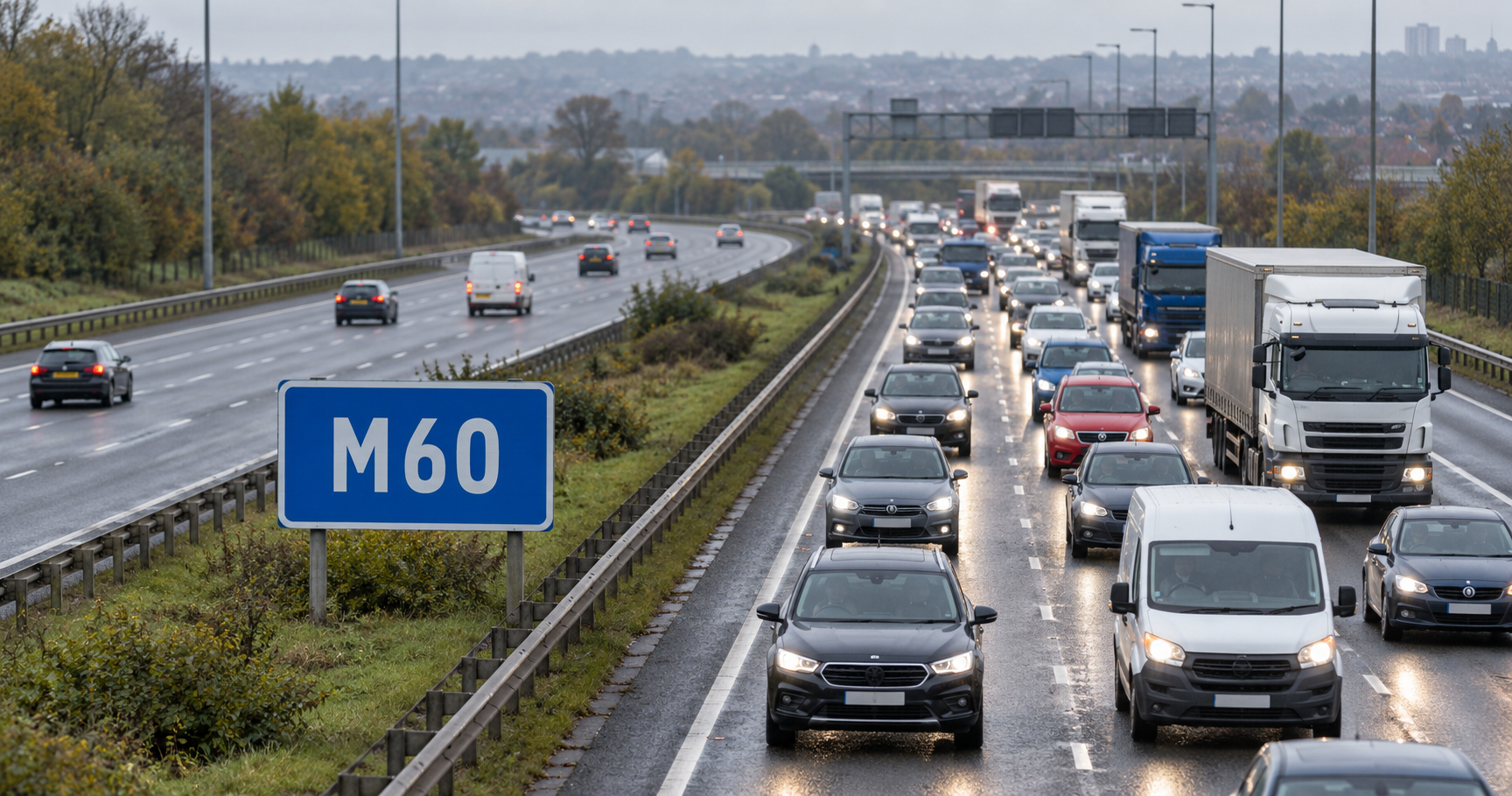
Understanding M60 Traffic Around Manchester
M60 traffic can affect everything from the daily commute to an airport transfer, making preparation useful whenever you travel around Greater Manchester. The motorway forms a ring around the city, connecting surrounding communities and providing links to other major roads across the region. Because journeys involve different junctions and directions, a report about congestion elsewhere on the motorway may have little relevance to your route. This guide explains how to interpret traffic information, prepare for disruption and make sensible travel decisions, while recognising that conditions change throughout the day and require a fresh check before departure.
Why Does the M60 Become Congested?
Congestion develops when the number of vehicles approaching a section exceeds the space available for traffic to move smoothly, particularly around busy junctions. Joining traffic, vehicles changing lanes and drivers braking can interrupt the flow, allowing queues to build behind the original slowdown. National Highways has identified lane weaving and frequent acceleration and deceleration as factors affecting traffic flow along the M60 and M62 corridor. Collisions, breakdowns, roadworks and poor weather can create additional pressure, so the cause of a queue matters when judging whether leaving earlier or choosing another route could improve your journey.
How to Check M60 Traffic Updates
Start with the National Highways travel updates service, which provides access to information about incidents, disruption and delays across England’s strategic road network. Look for the M60, identify the affected carriageway and compare the junction numbers with the section you intend to use. Read the update carefully, distinguishing between an incident location, the length of the queue and any estimated time for conditions to improve. Supplement that information with a navigation service before departure, remembering that a predicted arrival time is an estimate and that this article does not provide a live assessment of current conditions.
Planning Around Roadworks and Closures
Before travelling, check whether planned works affect the main carriageway, an entry slip road or an exit, because each restriction changes your options differently. National Highways publishes scheme information and closure details, including dedicated information for the M60 junction 18 Simister Island project. Check the dates, direction and diversion instructions rather than assuming a restriction applies continuously or affects both sides of the motorway. Allow additional time when a closure overlaps your journey, review your destination approach beforehand and follow the signed diversion if required, since an alternative suggested by a navigation app may also become congested.
FAQs
Where Can I Find Reliable M60 Traffic Information?
National Highways is a useful starting point for official information about motorway incidents and planned disruption, while navigation services can help estimate your journey time. Compare the location, direction and publication time of any report before deciding whether it affects you, especially when finding information through a search engine. An older headline can describe a genuine incident that has already cleared, making its timestamp as important as its wording. Check again shortly before setting off, and arrange any further checks through a passenger or after parking safely rather than trying to read traffic updates while driving yourself.
What Do Clockwise and Anticlockwise Mean?
Clockwise and anticlockwise describe the two directions around the M60 ring, so the relevant choice depends on where you join and where you leave. Picture movement around a clock face: clockwise follows the hands, while anticlockwise travels in the opposite direction around the same circle. When reading an incident report, match that direction with your planned route and check the junctions involved before changing your departure plans. Avoid treating clockwise as another word for northbound or anticlockwise as southbound, because your geographical direction changes as you travel around different sections of the ring during a single journey.
When Is the Best Time to Travel?
There is no departure time that guarantees a clear journey, because traffic levels, incidents, weather and planned restrictions can change the conditions you encounter. If your schedule allows flexibility, compare estimated journey times for several departure options rather than assuming your usual travelling time will always work. Consider both the motorway section and the roads leading to your destination, since a quicker motorway run may still end in local congestion. For an appointment, flight or other fixed commitment, build in a sensible margin and check for overnight works when considering an early start or a late return.
Should I Leave the Motorway to Avoid Queues?
Leaving the M60 can help in some circumstances, but the decision should depend on the disruption ahead and the suitability of the alternative route. Compare the expected delay with the full diversion time, including junction queues, traffic lights and the roads needed to reach your destination. A route that appears shorter on a map may offer little advantage once other drivers make the same choice, particularly through busy residential areas. Follow official diversion signs during closures, make any route decision before reaching the exit and continue safely to the next junction if you miss your intended turning.
What Does a Red X Mean on the M60?
A red X above a motorway lane means that lane is closed, and drivers must obey the signal even when the road ahead appears clear. The closure may protect a broken vehicle, road workers or emergency responders, so move into an open lane safely as you approach the restriction. Follow the displayed speed limits and other motorway instructions, allowing space to respond calmly when vehicles ahead slow or change position. Never treat a closed lane as a way past congestion, and remember that signs on the road govern your immediate actions regardless of a navigation app’s instructions.
You May Also Read: Sedecordle
Conclusion
Managing M60 traffic starts with understanding your route, checking reliable information and allowing enough flexibility for conditions to change before or during your journey. Confirm the direction and junctions, review planned restrictions and use estimated travel times to support your decisions without expecting them to guarantee an arrival time. Once travelling, concentrate on the road, follow motorway signals and make calm decisions rather than reacting suddenly to a queue or missed exit. These habits make the information you find more useful and help you approach commuting, leisure travel and important appointments around Greater Manchester with a clearer plan.