
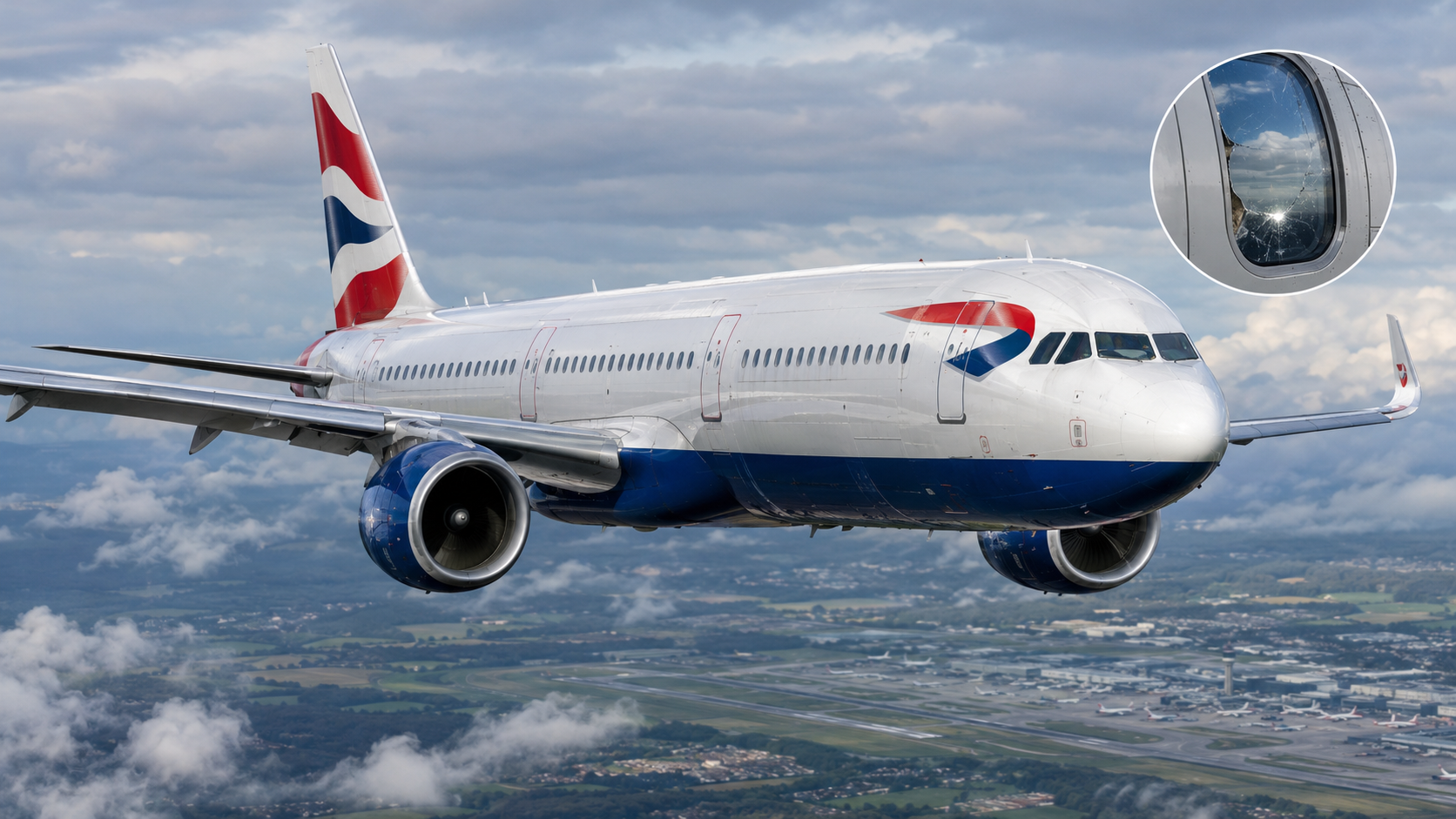
British Airways flight BA2660 declared an emergency after reports of a cracked passenger window interrupted its journey from London Gatwick to Faro, Portugal, on Tuesday, 13 October 2026. The Airbus A321-231 reportedly turned back towards the UK after the issue was identified, bringing the planned journey to an unexpected halt. Early reports indicate that the aircraft returned safely to Gatwick, while the airline worked to assist passengers affected by the disruption.
The British Airways flight BA2660 emergency has attracted attention because of the importance of aircraft inspections and precautionary decisions during flight. Although a damaged window can sound alarming, the exact level of risk depends on the type and extent of the damage, the condition of the remaining window layers and the aircraft’s cabin pressure. This article explains what has been reported, why the flight may have returned, what declaring an emergency means and what affected passengers should know.
What Happened to British Airways Flight BA2660?
According to reports published on 13 October 2026, British Airways flight BA2660 was travelling from London Gatwick Airport to Faro Airport in Portugal when a cracked passenger window was reported. Flight-tracking information indicated that the aircraft changed direction after travelling over Brittany in western France, rather than continuing towards its intended destination. Reports identified the aircraft as an Airbus A321-231 operated on the British Airways Euroflyer service.
The reported window issue prompted the flight crew to assess the situation and arrange a return to Gatwick. AirNav Radar, a flight-tracking service cited in media coverage, reported that the aircraft was diverting after a passenger window was found to be cracked. The available reports describe a precautionary response to a technical concern, rather than confirming that the aircraft suffered a major structural failure.
The aircraft reportedly landed safely back at London Gatwick, allowing passengers to leave the plane normally. British Airways described the technical issue as minor in reporting carried by international media and apologised for the inconvenience caused. However, the precise cause of the cracked window and the complete findings of any subsequent engineering inspection had not been established in the reports available at the time of writing.
Why Did BA2660 Declare an Emergency?
An aircraft emergency declaration allows pilots to communicate that a situation requires priority assistance or special handling from air traffic control. It does not automatically mean that an aircraft is about to crash or that everyone on board is in immediate danger. In the case of BA2660, reports linked the emergency to a cracked passenger window, although the full technical assessment was not publicly available when the incident was reported. Declaring an emergency can help pilots coordinate their route, receive appropriate instructions and prepare the destination airport’s ground teams for the aircraft’s arrival.
Aircraft windows are designed to withstand the pressures and environmental conditions experienced during flight, but any suspected damage needs careful evaluation. Commercial aircraft windows typically incorporate multiple layers, and visible damage does not necessarily mean that every layer has failed or that cabin pressure has been lost. Nevertheless, the crew cannot safely assume that a crack is harmless without assessing the circumstances. Returning to the departure airport may therefore be a sensible precaution, particularly when maintenance support and inspection facilities are available there. The precise condition of BA2660’s window and whether cabin pressure was affected remain matters that should not be assumed without official confirmation.
Why Did the Aircraft Return to London Gatwick?
London Gatwick was the departure airport for BA2660 and reportedly became the aircraft’s return destination after the window concern arose. Turning back can allow an aircraft to land at a suitable airport where engineers can inspect the affected component and determine whether repairs are necessary. The decision also depends on factors such as the aircraft’s condition, distance from suitable airports, weather, fuel and the guidance available to the flight crew. In this incident, media reports indicate that the aircraft reversed course over the Brittany region before returning to Gatwick, rather than continuing its scheduled journey to Faro.
Returning to the original airport does not necessarily mean that it was the only possible landing location or that an immediate catastrophe was expected. Pilots and airline operations teams consider several factors when deciding where to land after a technical warning. An airport familiar to the crew and supported by the airline’s maintenance network may offer practical advantages, although the precise reasoning behind this particular decision has not been fully published. The reported safe landing is an important outcome, but further details about the engineering assessment and the aircraft’s subsequent operational status would be needed to establish the complete sequence of events.
Was Everyone on Board Safe?
The reports available on 13 October 2026 stated that BA2660 returned safely to London Gatwick. This indicates that the flight completed its return without a reported accident during landing, which is the most important immediate development for concerned passengers and their families. However, it is important to distinguish a confirmed safe landing from broader claims about every passenger’s condition, whether anyone received medical attention or the final outcome of the inspection. Those details should only be presented as facts if British Airways, airport authorities or another reliable source confirms them. At the time of the reported incident, the principal public information concerned the cracked window, the return and the disruption to travel.
For passengers, an unexpected diversion can be stressful, especially when the reason involves a technical problem and an emergency declaration. Cabin crew and pilots are trained to follow operational procedures and communicate instructions when an aircraft encounters a concern. Passengers should listen carefully to the crew, follow safety instructions and avoid spreading unverified claims while the situation is being assessed. Once the aircraft has landed, airline staff can explain the arrangements for onward travel and any available assistance. Anyone directly affected should check official communications for confirmed information, rather than relying exclusively on social media posts or flight-tracking commentary.
What Happens to Passengers After the Emergency?
When a flight returns to its departure airport because of a technical issue, passengers may experience delays, a replacement aircraft or a change to their travel arrangements. The airline must assess the situation before deciding how the affected service will operate, and engineers may need to inspect the aircraft before it can return to service. For travellers on BA2660, the next steps depend on British Airways’ operational arrangements and the time required to resolve the reported window problem. Passengers should monitor airline notifications, retain booking details and speak to airport staff about rebooking, alternative departures or other available support.
Passengers travelling from the UK should also understand their rights when a flight is disrupted. Depending on the circumstances, applicable passenger-rights rules may provide assistance such as meals, refreshments, communication facilities and accommodation when an overnight stay becomes necessary. The availability of compensation is a separate question and depends on factors including the cause of the disruption, the airline’s obligations and the relevant legal rules. Travellers should keep receipts for reasonable expenses, save written communications from the airline and review the guidance published by the UK Civil Aviation Authority. They should not assume that every technical problem automatically qualifies for compensation.
What Happens Next in the BA2660 Investigation?
Following a reported aircraft window problem, engineers would normally examine the affected area and assess whether the aircraft meets the manufacturer’s requirements for continued operation. The inspection may involve checking the damaged component, evaluating the condition of the surrounding structure and determining whether repair or replacement is necessary. The airline may also review the circumstances in which the damage was identified and consider whether further investigation is required. These are general aviation maintenance procedures, not confirmation of the specific actions already completed on BA2660. The actual findings will depend on the inspection and any subsequent statements from British Airways or the relevant aviation authorities.
At present, the central reported facts are that BA2660 was travelling from Gatwick to Faro, a cracked passenger window was reported, the aircraft turned back and it landed safely in London. The exact cause of the damage, the technical condition of the window and any longer-term operational consequences require reliable confirmation. Readers following the British Airways flight BA2660 emergency should look for updates from British Airways, London Gatwick Airport and established UK news organisations. Flight-tracking platforms can help illustrate an aircraft’s route, but tracking data alone cannot explain every technical decision or establish the underlying cause of an incident.
Frequently Asked Questions
1. What happened to British Airways flight BA2660?
British Airways flight BA2660 reportedly declared an emergency on 13 October 2026 after a cracked passenger window was identified during its journey from London Gatwick to Faro, Portugal. The aircraft turned back and landed safely at Gatwick, according to published reports.
2. Why did BA2660 return to Gatwick?
Reports linked the return to a cracked passenger window. The crew’s decision to return allowed the aircraft to land at its departure airport for assessment, although the full technical reasoning has not been publicly established.
3. Was the British Airways BA2660 aircraft damaged?
A cracked passenger window was reported, but the extent of the damage and the condition of the other window layers were not fully confirmed. A detailed engineering inspection would be needed to establish the aircraft’s technical condition.
4. Did BA2660 land safely?
Yes. Reports published on 13 October 2026 stated that the aircraft returned safely to London Gatwick. The available reporting did not establish every detail about the passengers’ subsequent arrangements.
5. What should affected passengers do?
Passengers should check their booking notifications, contact British Airways about rebooking and keep receipts for reasonable expenses caused by the disruption. They can also review official UK Civil Aviation Authority guidance to understand their passenger rights.
You May Also Read: Sedecordle
Conclusion
The British Airways flight BA2660 emergency on 13 October 2026 interrupted a scheduled journey from London Gatwick to Faro after reports of a cracked passenger window. Available news reports indicate that the aircraft returned safely to Gatwick, while the airline worked to address the disruption affecting travellers. Although the incident raised understandable questions about aircraft safety, the reported facts do not establish that cabin pressure was lost or that a major structural failure occurred. The cause of the window damage and the outcome of any detailed inspection require further confirmation. Passengers and readers should follow verified updates from British Airways and trusted news sources rather than rely on speculation.british airways flight ba2660 emergency