
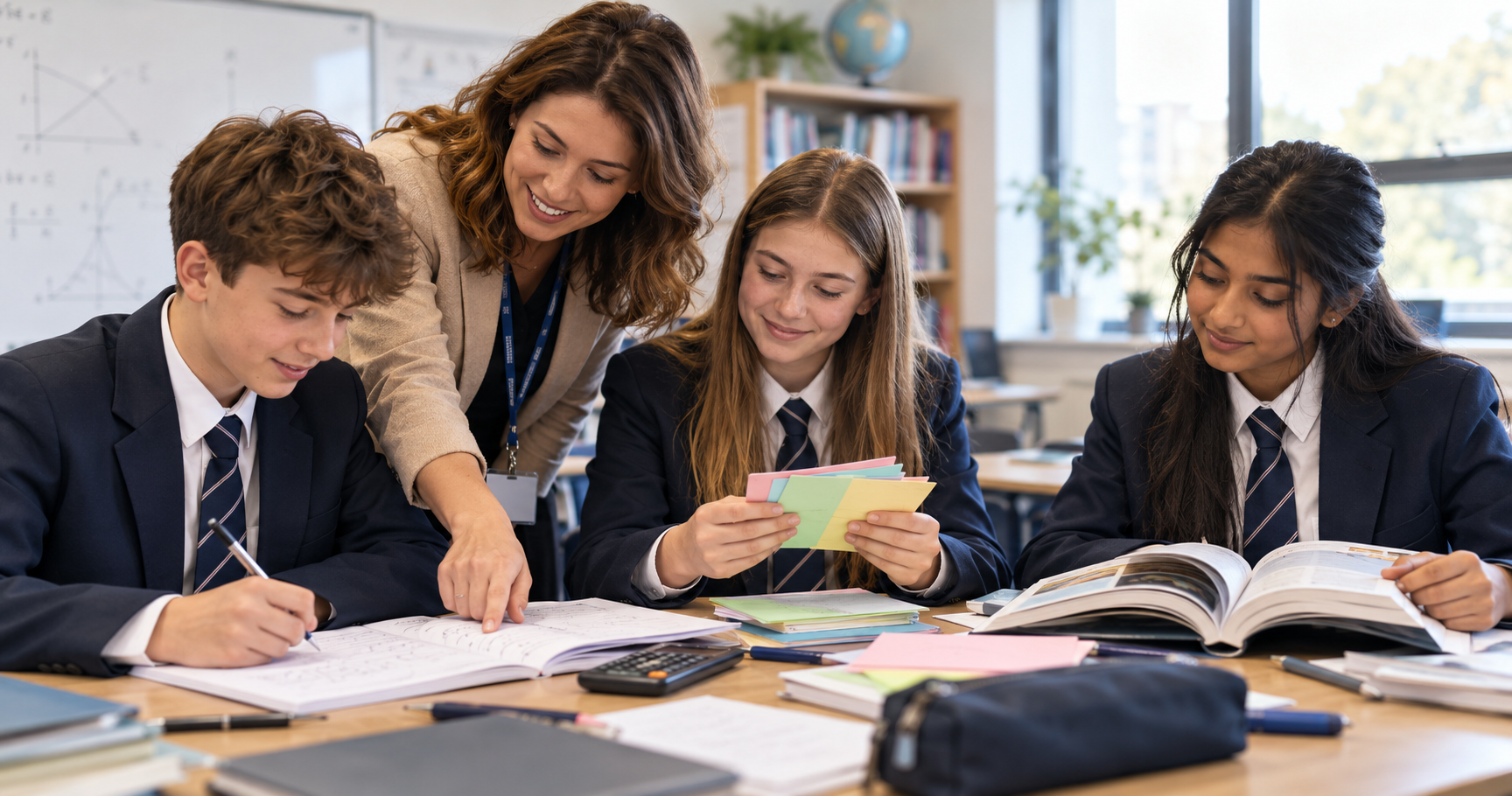
Early gcse preparation secondary schools helps pupils build the knowledge, confidence and study habits they will need when examination courses become more demanding. For parents searching for early GCSE preparation secondary schools, the most useful approach is to look for steady progress, clear teaching and manageable routines that support learning throughout the school year. Preparation can include reading regularly, strengthening maths skills, reviewing classroom topics and asking teachers for help before small misunderstandings grow. This guide explains when to begin, which revision methods to practise and how families can support achievement while protecting time for friendships, hobbies and rest.
When Should GCSE Preparation Begin?
In England, Key Stage 3 covers Years 7 to 9, while Key Stage 4 covers Years 10 and 11, with most pupils taking GCSEs in Year 11. These stages provide a helpful framework, although families should ask their school when individual GCSE courses begin and how subject options are organised. During the earlier years, preparation should focus on understanding current lessons, completing homework carefully and developing reliable organisational habits across different subjects. As pupils approach their examination courses, teachers can explain the relevant syllabus and assessments, allowing revision to follow material already taught rather than unfamiliar topics selected at random.
Build Strong Foundations in Core Subjects
Strong foundations make later study more manageable because GCSE tasks often require pupils to combine several skills within a single question or extended response. In English, regular reading and thoughtful discussion can develop vocabulary, comprehension and the ability to explain an interpretation using evidence from a text. In maths, pupils should revisit fractions, percentages, negative numbers and basic algebra whenever classroom work reveals uncertainty, using worked examples before attempting similar questions independently. For science and other subjects, encourage accurate vocabulary and clear explanations, then ask teachers which underlying skills need attention so practice addresses genuine gaps in understanding at school.
Create a Manageable Weekly Study Routine
A realistic study routine gives early GCSE preparation in secondary schools a clear structure without filling every evening with additional academic work or repeated testing. Begin with a manageable session that fits around homework, choosing one specific goal such as practising equations, reviewing vocabulary or explaining a recently studied concept. Pupils can keep a simple weekly plan showing homework deadlines, short review sessions and activities outside school, then adjust it when demands or energy levels change. Parents should judge the routine by whether it helps understanding and remains sustainable, rather than treating the number of minutes studied as the achievement.
Practise Active Recall and Spaced Revision
Retrieval practice means trying to recall information before checking notes, while spaced practice involves returning to learning after a gap instead of concentrating every review into one sitting. The Education Endowment Foundation discusses these approaches as useful components of study routines, alongside feedback and purposeful planning. Pupils might answer a few questions from memory, explain a process aloud or sketch a diagram, then compare their response with accurate classroom material and correct omissions. Returning to that topic later provides another opportunity to check understanding, although the task should match what pupils have learned and become more challenging gradually over time.
How Schools and Parents Can Support Progress
Teachers can make preparation more useful by identifying misconceptions, modelling successful answers and explaining the next practical step a pupil should take after receiving feedback. Families can support this work by attending school meetings, checking homework arrangements and asking which resources match the subjects and courses their child actually studies. If difficulties continue, discuss available classroom support or targeted intervention before assuming that paid tuition is necessary, and involve the pupil in deciding what feels helpful. Effective early GCSE preparation in secondary schools should also allow time for sleep, exercise and enjoyable activities, with routines adjusted when workload becomes overwhelming.
FAQs
What is the best age to start GCSE preparation?
There is no single starting date that suits every pupil, because readiness depends on current understanding, school expectations and the demands of different subjects. In the earlier secondary years, a sensible starting point is consistent homework, regular reading and occasional review of topics that need further practice or explanation. More focused GCSE revision can develop as examination content is taught, with teachers helping pupils decide which knowledge and question types deserve attention at each stage. If a child is already struggling, ask for support promptly rather than waiting for Year 11, but avoid introducing advanced examination material without appropriate guidance.
Do pupils need private tutoring to prepare early?
Private tutoring is an optional form of support, rather than a requirement for successful GCSE preparation, and its value depends on the problem being addressed. Before arranging lessons, ask the subject teacher whether the difficulty involves missing knowledge, ineffective study habits, confidence or misunderstanding a particular type of classroom task. School support, appropriate practice materials and clear feedback may provide a suitable starting point, while tuition can offer additional explanation when a specific need remains. If families choose a tutor, agree realistic goals and review progress against those goals, ensuring that extra sessions fit comfortably alongside homework and other commitments.
When should pupils start using GCSE past papers?
Past papers are most useful when pupils have learned enough relevant content to understand the questions and benefit from reviewing their responses afterwards with support. Before that point, teachers can recommend individual questions or shorter exercises matched to classroom topics, making practice more accessible and feedback easier to apply immediately. When using examination resources, check the qualification, awarding body and specification with the school, because similarly named subjects can assess different content or require different approaches. Pupils should study why an answer earns marks and practise improving their work, rather than memorising model responses without understanding the reasoning behind them.
You May Also Read: Sedecordle
Conclusion
Early GCSE preparation in secondary schools works best when it develops secure understanding, practical study habits and the confidence to seek help as questions arise. Start with the learning your child encounters now, agree a manageable routine and use teacher feedback to decide what needs revisiting before adding more resources. As GCSE courses progress, introduce suitable examination questions and regular review while continuing to make room for friendships, interests and time away from schoolwork. Speak to your child’s teachers about one achievable next step this term, then review whether that change makes learning clearer, more independent and easier to sustain.